
Prices, specs and availability were checked on October 14, 2026. They change often, so confirm before you buy.
How this guide was researched: We did not hands-on test these straighteners. This guide combines manufacturer specifications (attributed to the brand), independent editorial testing and expert advice from NBC Select and Which?, and our own analysis, which we label as such.
Affiliate disclosure: Natural Skin Studio is an affiliate site. If you buy through some links here, we may earn a commission at no extra cost to you. Commissions don’t decide what we recommend or how we rate a tool’s drawbacks.
Introduction
A flat iron that costs more than a good pair of boots promises glass-smooth, shiny hair. Then you meet the problem the marketing skips: the iron that suits one person’s dense, coarse waves can scorch someone else’s fine, color-treated strands.
The best professional hair straighteners are the ones that match your hair, your habits and your budget. This guide covers what separates the options (plate material, temperature control, plate width, weight, cordless versus corded) and which products suit which readers. The most expensive model is often not the right buy.
Quick Comparison: Best Professional Hair Straighteners
| Product | Best for | Plate type | Temperature control | Main advantage | Main limitation | Approx. US price* |
|---|---|---|---|---|---|---|
| ghd Platinum+ | Most hair types, one-tool styling | Ceramic | Fixed 365°F | Predictive heat, rounded barrel, 3-year warranty | No adjustment | $319 list (ghd.com) |
| ghd Chronos | Premium, newest ghd tech | Ceramic (verified on Chronos Max; same platform) | Fixed 365°F | Motion-responsive heat | Costs more than Platinum+ | $359 list (ghd.com) |
| ghd Chronos Max | Long, dense, curly hair | Ceramic floating, 2″ | Fixed 365°F | Fewer passes on big sections | Bulky near roots; no heat settings | $379 list (ghd.com) |
| BaBylissPRO Nano Titanium | Coarse, resistant hair | Titanium, 1.25″ (also larger) | 5 settings, up to 450°F | Heat headroom | Easy to overheat | ~$180 (NBC Select) |
| T3 SinglePass StyleMax | Fine to medium hair, color-treated | Ceramic, 1″ | 9 settings with texture presets | Guided heat | No wide-plate version verified | ~$160–$180 |
| CHI Lava 1.5″ | Adjustable heat, thick hair | Volcanic-lava ceramic, 1.5″ | Digital, 200–450°F, locks | Wide range, extra-long plates | No cordless or travel option | ~$178 (chi.com) |
| Dyson Corrale | Cordless styling | Flexing copper-alloy | 330, 365 or 410°F | Corded or cordless | Short battery; premium price | ~$499 list; often discounted |
| Conair InfinitiPRO Tourmaline Ceramic 1″ | Budget | Tourmaline ceramic | 5 settings, up to 455°F | Very low price | Basic build; high max heat | ~$29–$50 |
Approximate, and sale prices vary by retailer. Dyson’s US price was not confirmed on a current retailer page.
Our Top Picks at a Glance
- Best overall: ghd Platinum+
- Best premium upgrade: ghd Chronos
- Best for thick or coarse hair: BaBylissPRO Nano Titanium (wide-plate alternative: ghd Chronos Max)
- Best for fine or fragile hair: T3 SinglePass StyleMax
- Best adjustable-temperature option: CHI Lava Hairstyling Iron
- Best cordless option: Dyson Corrale
- Best budget option: Conair InfinitiPRO Tourmaline Ceramic
Curly, frizzy and textured hair gets its own section below. We didn’t find enough evidence to name a single winner there.
One note on terms. Hair thickness, strand diameter and density are different things. Strand diameter is how wide each hair is (fine, medium, coarse). Density is how many hairs you have. “Thick hair” can mean either or both. Dense but fine hair needs speed and coverage. Sparse but coarse hair needs dependable heat.
1. Best Overall Professional Hair Straightener: ghd Platinum+
Why it’s our pick (our analysis): The Platinum+ covers the widest range of readers without being the priciest ghd. It has a 1-inch format that straightens, curls and waves, a rounded barrel, and a longer warranty than ghd’s wide-plate model. NBC Select’s panel also recommended it, with a stylist praising its curved edge for waves.
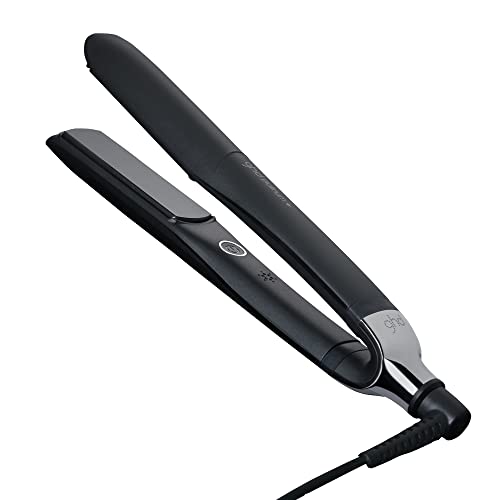
- SALON-TESTED RESULTS, NO GUESSWORK: Ultra-Zone tech reads your hair 250x/sec for 70% stronger hair and 75% more shine in…
- NO DIAL, NO DAMAGE: Locked at ghd’s stylist-tested 365°F “sweet spot” so you never guess a setting. Up to 2x color prote…
- PREMIUM CERAMIC FLOATING PLATES: Precision-milled ceramic plates with a whisbone hinge glide smoothly and maintain even …
What ghd says: The styler is preset to 365°F, and ghd says its sensors monitor the temperature 250 times a second. ghd also says it recognizes hair thickness and styling speed and adjusts accordingly. ghd’s US product page lists a 3-year warranty and a 21-day return window. It showed $319 list and $239 during a promotion.
Pros: Simple to use, versatile, strong warranty.
Cons: There is no temperature dial. ghd’s 365°F may be too low for very coarse, resistant hair and unnecessary for very fragile hair. Reviewers on ghd’s site are mixed on plate size: one 55-to-64-year-old reviewer found the plates smaller than she wanted.
Hair types: Straight to wavy, medium density, normal to lightly treated hair.
Skip it if: You want adjustable heat or have very long, dense hair.
2. Best Premium Hair Straightener: ghd Chronos
The Chronos is ghd’s newer flagship. ghd says its motion-responsive heat adjusts as you glide and gives “3x faster” styling than the older ghd Original. That claim comes from ghd’s own lab testing, and we found no independent test confirming it.

- 3x faster styling results: Our patented, smart HD motion-responsive technology adapts to your movements for ultra-fast o…
- Long-lasting shine: Achieve up to 85% more shine, 2x less frizz, and high-definition styles that last for 24 hours¹
- No extreme heat damage: Maintains the optimal 365ºF temperature with 2x more heat monitoring responsiveness for safe, co…
Is the upgrade worth it? Both ghd models hold 365°F, so the difference is responsiveness and speed, not a wider temperature range. At $359 list versus $319 for the Platinum+, it makes sense if you want the latest ghd design, style every few days, or find it on sale. If you straighten occasionally, the Platinum+ gets you almost all the way there.
Cons: Fixed temperature, premium price, and no plate width verified beyond the 1-inch model.
3. Best Straightener for Thick or Coarse Hair: BaBylissPRO Nano Titanium
NBC Select’s experts split plate materials by hair type. They call titanium well suited to coarse, thick, curly and coily hair because it heats quickly and evenly. They call ceramic gentler, a better match for dry, damaged or fine hair. The trichologist they quote cautions that titanium can be harsh and is best left to professionals on fragile hair.

- ULTRA-SLEEK STRAIGHTENING PERFORMANCE — Create smooth, sleek straight styles with 1-inch plates designed for short, medi…
- SMOOTH, FRIZZ-FREE SHINE — Nano Titanium technology plates transfer heat evenly to help minimize hot spots while creatin…
- FASTER STRAIGHTENING PERFORMANCE — Extended length, full-floating plates maintain complete hair contact for fewer passes…
NBC Select listed the BaBylissPRO Nano Titanium at about $180 with titanium plates, five settings up to 450°F and 1.25-inch plates. It also comes in a larger size. NBC flagged it as bulkier than rivals. Several BaBylissPRO variants exist, so plate size and settings vary. Check the exact listing.
Cons: At the top setting it can overheat hair that doesn’t need it. Dense hair on a 1.25-inch plate means many sections.
For long, dense hair: The ghd Chronos Max has 2-inch ceramic floating plates, and ghd says it is made for long, thick and curly hair. It lists at $379 with a 2-year warranty and an 8.8-foot cord. It holds a fixed 365°F, and some ghd reviewers with coarse, textured hair wanted heat settings. That is anecdotal, but it’s the trade-off to know.
Our guide to the best hair straighteners for thick hair compares more models by density, coarseness and plate width.
Skip it if: Your hair is fine, damaged or heavily treated.
4. Best Straightener for Fine or Fragile Hair: T3 SinglePass StyleMax
Fine hair generally needs less heat. NBC Select’s stylist suggests about 250°F for fine, low-density hair, though experts differ on exact numbers.

What T3 says: The StyleMax takes your hair texture (fine, medium or coarse) and matches you to one of nine heat settings. It also has a curl mode, ceramic plates and a beveled edge for waves. It lists at about $160 on T3’s site, with some retailers higher.
Pros: Guided starting temperatures help first-time premium buyers, and it has nine adjustable settings.
Cons: We verified only the 1-inch version. The presets are T3’s own logic, and there is no independent testing behind them in our sources. Less experienced users may find the extra settings fiddly.
Practical advice: Avoid repeated passes. One slow, steady pass at a lower setting beats three fast passes at a higher one. For more, see our guide to hair straighteners for fine hair. ELLE also publishes a flat-iron roundup for fine hair, but we couldn’t load it to review its picks.
5. Best Straightener for Curly, Frizzy or Textured Hair
We’re not naming one winner here. Results depend more on preparation than on the iron.
What Which? advises: Which? says to blow-dry curly or coiled hair straight and fully dry before using a flat iron. It adds that tighter textures may need more heat but recommends starting low. It also says to protect dry, coily hair with creams or oils.
Realistic expectations: Small sections, steady tension and a thorough blow-dry matter more than raw wattage. Humidity can undo even a flawless press.
Tools that fit: The ghd Chronos Max suits long, curly hair when speed is the problem. The BaBylissPRO and CHI Lava suit hair that needs more heat headroom. NBC Select’s experts suggest limiting flat ironing of afro-textured hair to about once a week at most.
6. Best Adjustable-Temperature Straightener: CHI Lava
Adjustable heat matters when your hair has mixed textures (finer at the hairline, coarser at the nape) or has been color-treated or bleached. It lets you start at the lowest workable setting rather than accepting one number.

- VOLCANIC LAVA & CERAMIC TECHNOLOGY: Professional lava ceramic flat iron combines volcanic lava minerals with CHI ceramic…
- LOWER TEMPERATURE STYLING: Advanced heat-conducting materials allow effective straightening at lower temperatures, helpi…
- PROFESSIONAL SMOOTHING PERFORMANCE: High-performance flat iron quickly straightens, smooths, and polishes hair while enh…
CHI lists its Lava 1.5-inch iron with a digital display, a 200–450°F range, a temperature lock, extra-long 5-inch plates, a smart chip for heat recovery and an 11-foot cord. It’s $178.07 on chi.com. The 1-inch version is $159.99. CHI says volcanic-lava ceramic glides well on coarse hair and allows lower temperatures. That is a brand claim.
Cons: Corded only, and no travel-friendly option in this model. The 450°F ceiling is a temptation for fragile hair.
Alternatively: The T3 StyleMax adds guided presets. CHI gives you a broader raw range.
7. Best Cordless Straightener: Dyson Corrale
The Corrale runs corded or cordless, with three settings (330, 365 and 410°F). It has flexing plates that gather hair as they close. Dyson says this lets you reach the same style with less heat and “half the damage,” compared with its own solid-plate version. That’s a brand claim, not an independent finding.

- Use corded or cord-free for extra versatility. Up to 30 minutes cord-free styling: Delivers the same thermal performance…
- Less heat, half the damage: Flexing plates gather your hair for more control, so you can achieve the same style with les…
- Auto shut-off and Safety lock: Switches off after 10 minutes of inactivity for added peace of mind. Safety lock allows f…
Retailer listings put cord-free use at up to about 30 minutes, though Dyson says run time varies with hair type and technique. Which? lists its weight at 0.57 kg, versus 0.44 kg for the ghd Platinum+. List price has been around $499, with discounts of about $100 reported.
Pros: Freedom from the cord, and a flight-ready battery disconnect.
Cons: Heavier, a short battery, and a price that Tech Advisor, cited by one retail review aggregator, said is about double competitors’ for results that aren’t dramatically different. That’s an outdated and partial view, but it matches our own value read.
Skip it if: You want the cheapest route to smooth hair. Read our Dyson Corrale review for the full breakdown.
Other cordless option: ghd makes the Unplugged. ghd positions it as a top-up tool rather than a full replacement. We didn’t verify its US price.
8. Best Budget-Friendly Option: Conair InfinitiPRO Tourmaline Ceramic 1″
Conair’s CS1000 has a floating plate, five heat settings up to 455°F and automatic shutoff, according to Conair. Retailer prices we saw ranged from about $29 to $50. A Kohl’s listing mentions a 5-year limited warranty, but confirm it with the seller you buy from.

- LESS FRIZZ, MORE SHINE: Fight the frizz with the INFINITI PRO CONAIR Flat Iron Hair Straightener with Extra-Long Plates….
- TURN UP THE HEAT: This flat iron has a true ceramic heater that heats up in 15 seconds while maintaining consistent heat…
- BE THE PRO: This hair iron has extra-long floating plates that make it easy to style quickly—you can even use it to crea…
Pros: Low cost, adjustable heat, ceramic plates.
Cons: Build quality and heat recovery won’t match premium tools. The 455°F top setting needs discipline, especially on fine hair. It is single-voltage, so skip it for international travel.
Who should choose another model: Daily stylers with long, dense or damaged hair, who may want better heat control.
Ceramic vs. Titanium: Which Is Better?
| Ceramic | Titanium | |
|---|---|---|
| Heat behavior | Even and smooth; generally lower peak heat | Fast to heat, strong at high temperatures |
| Typical advantages | Gentler feel, often cheaper | Durable, fewer passes on resistant hair |
| Potential limitations | Coatings can wear; may be slow on very thick hair | Can overheat fragile hair quickly |
| Suitable users | Fine, damaged, color-treated, mixed textures | Coarse, thick, curly, coily |
| Buying note | Check whether plates are solid or coated | Look for adjustable heat and recovery |
Experts disagree on the details. One stylist quoted by NBC Select prefers ceramic for its “pull” on hair. Another expert warns against titanium on fine hair. Neither material guarantees damage-free styling.
What Temperature Should You Use?
No single temperature suits everyone. NBC Select’s stylist suggests about 250°F for fine hair, 250–350°F for medium-thick hair and 350–400°F for thick, coarse hair. ghd says 365°F is its optimal fixed setting, and NBC’s experts say cuticle damage can occur above roughly 356°F. These views don’t fully agree.
Start at the lowest effective setting, follow the manufacturer’s guidance, and increase only if needed. Be especially cautious with damaged or chemically treated hair.
How to Get Salon-Quality Results at Home
- Start with fully dry hair if you’re using a conventional flat iron. Moisture heated between plates can harm hair. If you hear sizzling, stop.
- Apply a heat protectant before blow-drying and styling.
- Divide hair into manageable sections and clip the rest.
- Use controlled, smooth passes, working close to the root and gliding to the ends.
- Avoid repeated passes over the same section. Which? advises one slow pass per section.
- Let the tool cool before storing it in a heat-resistant pouch.
Wet-to-dry tools such as the Dyson Airstrait or ghd Duet Style are different. They use heated air rather than hot plates and are built for damp hair. NBC Select lists the Airstrait as its best overall, at about $499. Conventional flat irons shouldn’t be used on damp hair.
Are Expensive Professional Straighteners Worth It?
Sometimes. Higher prices typically buy steadier heat, smoother plates, longer warranties (ghd’s Platinum+ lists three years) and better ergonomics. Those matter most for people who style often or have dense hair.
A pricey iron won’t fix poor prep or oversized sections, though. NBC Select’s stylists note that occasional users may be fine with something cheaper. In our analysis, the Platinum+ delivers the best balance of price and polish. The Corrale and Chronos Max are worth it only if their specific features solve a problem you actually have.
Buying Guide: What to Check Before You Purchase
- Temperature settings: Adjustable if your hair is mixed, treated or fragile. Fixed if you prefer simplicity.
- Plate design: Ceramic or titanium, and whether the plates are solid or coated. Rounded edges help with curls and waves.
- Plate width: Wider plates are faster on long hair but less versatile, as Which? notes. NBC Select’s experts caution that very wide plates, around 2 inches and up, are harder to use well.
- Weight and cord length: Which? lists weights from about 0.36 to 0.67 kg across tested models.
- Voltage: Look for dual voltage if you travel. ghd lists universal voltage on its irons. Some Conair models are single voltage.
- Safety: Automatic shutoff and a heat-resistant guard.
- Warranty and returns: ghd lists 2 to 3 years and a 21-day return window on its US site.
Frequently Asked Questions
1. What is the best professional hair straightener for salon-quality results?
For most readers, the ghd Platinum+. For specific needs, choose by hair type. Wide plates suit long, dense hair, and adjustable heat suits fine or treated hair.
2. Which straightener is best for thick and frizzy hair?
The BaBylissPRO Nano Titanium suits coarse hair. The ghd Chronos Max suits long, dense hair. Blow-dry first either way.
3. Is ceramic or titanium better for hair?
Neither is universally better. Ceramic is generally gentler. Titanium is faster and hotter. Neither prevents damage.
4. What temperature should I use for fine hair?
Start low. One stylist cited by NBC Select suggests about 250°F, but follow your tool’s guidance.
5. Can professional straighteners damage hair?
Yes. Excess heat, repeated passes and styling damp hair can all cause damage, even with premium tools.
6. Are expensive hair straighteners worth the money?
They can be, for frequent users or dense hair. Occasional users often do well with less costly tools.
7. What plate width should I choose?
One inch for versatility and precision. Wider plates for long, dense hair, though they are less nimble near roots.
8. Can I use a flat iron on damp hair?
Not a conventional one. Use a tool designed for damp hair, such as a wet-to-dry styler.
9. How often should I replace my hair straightener?
When plates chip, heat becomes uneven or it stops working. ghd says its irons last several years with proper care.
10. What features matter most when buying a professional flat iron?
Temperature control, plate material and width, weight, shutoff and warranty.
Final Verdict
The best professional hair straighteners are a short list, not one winner. Choose ghd Platinum+ for an all-rounder, ghd Chronos if you want the newest ghd and can afford it, BaBylissPRO Nano Titanium for coarse hair, T3 SinglePass StyleMax for fine or color-treated hair, CHI Lava for broad adjustable heat, Dyson Corrale if going cordless is worth a premium, and Conair InfinitiPRO to spend as little as possible. Then use the lowest heat that works and keep your passes to a minimum.