
Natural Skin Studio is reader-supported. If you purchase through links on this page, we may earn a commission at no additional cost to you.
As an Amazon Associate, Natural Skin Studio earns from qualifying purchases.
Editorial note: We did not personally test these devices. This guide is built from manufacturer specifications, FDA database records, published research and retailer listings reviewed in November 2026. Prices and warranty terms change often, so always confirm details on the seller’s page before buying.
If your part is widening, your ponytail feels thinner, or you’re seeing more scalp under bright bathroom lights, you’re not alone. Pattern hair loss is the most common type of hair loss, and the search for the best red light therapy devices for hair growth has exploded because these gadgets promise a drug-free way to support thinning hair at home.
Here’s the honest version: red light therapy (also called low-level laser therapy, or LLLT) has real clinical research behind it for certain types of pattern hair loss. It is not a cure for baldness, it does not work for every kind of hair loss, and it works slowly. Results vary from person to person, and no device can guarantee regrowth.
In this guide, you’ll learn how red light therapy for thinning hair is thought to work, how to read specs like wavelength and diode count, what “FDA-cleared” does and doesn’t mean, how helmets, caps and bands differ, and which of seven popular devices may suit your hair type, budget and schedule. We also cover safety, realistic timelines and the most common buying mistakes.
Quick Comparison – Best Red Light Therapy Devices for Hair Growth
Specifications below come from manufacturer pages, FDA database records and retailer listings. Where sources disagreed, we say so in the detailed reviews.
| Product | Device type | Light technology | Wavelength | Treatment time | FDA clearance | Best for |
|---|---|---|---|---|---|---|
| Capillus PRO | Cap (dome insert) | 272 lasers | 650 nm | 6 min per session | 510(k) cleared (272 Pro listed) | Short sessions, full-scalp coverage |
| iRestore Elite | Helmet | 300 lasers + 200 LEDs (500 total) | 625, 655, 680 nm | 12 min per session | 510(k) cleared (per manufacturer) | Premium, maximum-coverage helmet |
| Kiierr Laser Cap | Cap | 148 to 302 lasers, by model | 650 nm | About 30 min per session (every other day, per reviews) | 510(k) cleared (148 and 272 models listed) | Value and model choice |
| HairMax LaserBand 82 | Band (handheld-style) | 82 lasers | 655 nm (per retailer data) | As little as 90 seconds | 510(k) cleared (per manufacturer) | Speed, travel, targeted passes |
| Theradome PRO LH80 | Helmet | 80 lasers | 678 nm (per FDA summary) | 20 min, twice weekly | 510(k) cleared (K171775) | Low weekly time commitment |
| CurrentBody LED Hair Growth Helmet | Helmet | 120 LEDs (per manufacturer) | 620–660 nm | 10 min per session | FDA-cleared (per manufacturer) | LED-only, full-coverage design |
| HigherDOSE Red Light Hat | Baseball-style cap | 120 LEDs | 650 nm ± 10 nm | 10 min per session | 510(k) cleared (K242363) | Comfort and everyday wear |
| Laduora Duo | Handheld scalp brush | Red LED plus blue light, vibration, warmth, serum pods | 660 nm red (per reviews) | 5 min, three times weekly | Not verified for hair growth | Scalp care, not a clinical pick |
[IMAGE: Comparison infographic. Alt text: “Comparison of red light therapy hair growth devices by wavelength, treatment time and FDA clearance”]
Editorial Picks at a Glance
These are editorial judgments based on documented specs, regulatory records and convenience. They are not lab-tested rankings, and we only assigned an award where the available evidence supports it.
- Best Overall Red Light Hair Growth Device: Capillus PRO
- Best Premium Hair Growth Helmet: iRestore Elite
- Best Laser Hair Growth Cap for Value-Minded Shoppers: Kiierr Laser Cap (272 Premier or similar)
- Best for Targeted Scalp Treatment and Portability: HairMax LaserBand 82
- Best Comfortable Wearable Device: HigherDOSE Red Light Hat
- Best Budget-Friendly Option: No award. The lowest-priced FDA-cleared device in our group is the HigherDOSE hat, but we can’t call any device “budget” when its own FDA summary reports no clinical data (more on that below).
What Is Red Light Therapy for Hair Growth?
Red light therapy for hair goes by several names: photobiomodulation (PBM), low-level light therapy (LLLT) and low-level laser therapy. The International Society of Hair Restoration Surgery (ISHRS) explains that these terms describe the same basic idea: low-intensity light at specific wavelengths, delivered to the scalp, may influence the behavior of hair follicle cells.
“Low-level” matters. These devices don’t heat or cut tissue. They deliver small amounts of red or near-infrared light, and the goal is a biological nudge rather than a burn or a peel.
The technology has been around for decades. ISHRS traces it to the 1960s, when a Hungarian physician noticed hair regrowth on laboratory mice after low-power laser exposure. Today, consumer versions come as helmets, caps, bands and combs you can use on the couch.
How Does Red Light Therapy Stimulate Hair Follicles?
Scientists don’t fully agree on every detail, so it’s worth separating what’s proposed from what’s proven. The leading explanations include:
- Mitochondrial stimulation. A published review of home-use devices describes the proposed mechanism as stimulating mitochondria in hair follicle stem cells, with an enzyme called cytochrome c oxidase acting as the light-absorbing target for red light. In plain English, light may help cells produce more energy.
- Improved blood flow. ISHRS-affiliated clinicians describe increased circulation around follicles as one of several simultaneous effects.
- Growth-factor signaling. Light appears to prompt follicle cells to produce more of the signals that support the hair growth cycle.
- Shifting follicles toward the growth phase. Pattern hair loss shrinks follicles over time, producing shorter, finer hairs. The hope is that light helps some miniaturized follicles produce thicker hair again.
One concept from ISHRS is especially useful for shoppers: the biphasic dose response. Too little light appears ineffective, while too much may inhibit follicles. That’s why “more power” isn’t automatically better, and why you should follow your device’s schedule rather than doubling sessions.
Evidence note: the mechanisms above are proposed explanations. They help explain why light might work but don’t prove that any specific device will work for you.
Does Red Light Therapy Really Work for Hair Growth?
For some people with early to moderate pattern hair loss, the research is encouraging. Here’s what we can responsibly say.
What the research supports. A systematic review and meta-analysis published on PubMed examined randomized controlled trials of FDA-cleared, home-use LLLT devices for pattern hair loss. The authors screened 135 articles through January 2020, and only seven met their inclusion criteria. That small number is itself telling: well-controlled trials are limited, and they cover specific devices rather than the whole market.
An older Cochrane review of treatments for female pattern hair loss found low-level laser comb therapy produced a larger change in hair count than a sham device, but participants did not rate their own improvement as clearly better (low-quality evidence). Hair counts and how people feel about their hair don’t always move together.
What the research does not support.
- It does not show that red light therapy cures baldness.
- It does not show that every device performs like the ones tested.
- It does not establish benefit for every alopecia type. Patchy, sudden or scarring hair loss needs a medical diagnosis first.
- Completely bald, shiny areas generally lack active follicles for light to work on. ISHRS notes that light needs to reach follicles that are still present.
Manufacturer claims versus evidence. Brands often cite impressive numbers, such as double-digit percentage increases in hair count. Those figures typically come from company-sponsored trials of a specific device model, measured over a specific period. We list them as manufacturer claims, not independent proof.
A realistic frame. Many hair-restoration clinicians describe photobiomodulation as an adjunct, something that works best alongside a broader plan, and a tool for slowing loss and preserving existing hair as much as for growing new strands. If that’s the goal you have in mind, red light therapy fits well. If you expect a full head of new hair in a few weeks, you’ll likely be disappointed.
Best Red Light Therapy Devices for Hair Growth – Detailed Reviews
Each review separates manufacturer specifications from our editorial interpretation. We haven’t tested these devices ourselves.
1. Capillus PRO Laser Hair Growth Cap – Best Overall
Overview: Capillus makes soft, flexible laser domes that fit under a regular baseball cap. The PRO is the brand’s 272-laser model, and its short session time is its defining feature.

Key specifications (manufacturer and FDA records):
- 272 medical-grade laser diodes, no LEDs
- 650 nm wavelength, 5 mW per diode (1,360 mW total, per Capillus)
- 6-minute automatic session
- Rechargeable and cordless
- 3-year warranty listed by Capillus
- FDA 510(k) records list the Capillus 272 Pro among cleared models, indicated for androgenetic alopecia in people with Fitzpatrick skin types I to IV
- Reported price: from about $1,019 (prices vary widely by retailer and promotion)
Main benefits:
- Six minutes is among the shortest full-scalp sessions in this category, which matters because consistency is everything.
- All-laser design with a clear diode count.
- Newer variants (PRO S2, Spectrum) exist if you want more diodes or an added near-infrared wavelength, though their clearance status should be checked model by model.
Drawbacks:
- High upfront cost.
- Single-wavelength PRO model.
- Capillus advises daily use, so you’re committing to a daily habit.
Who should consider it: People who want a lower time commitment per session and a documented 510(k) record for the specific model.
Who should skip it: Anyone with a tight budget, or people with Fitzpatrick skin types V to VI, since the cleared indication covers types I to IV.
Value assessment: Premium price, strong convenience. If daily six-minute sessions are what keep you consistent, the cost-per-use over several years can make sense.
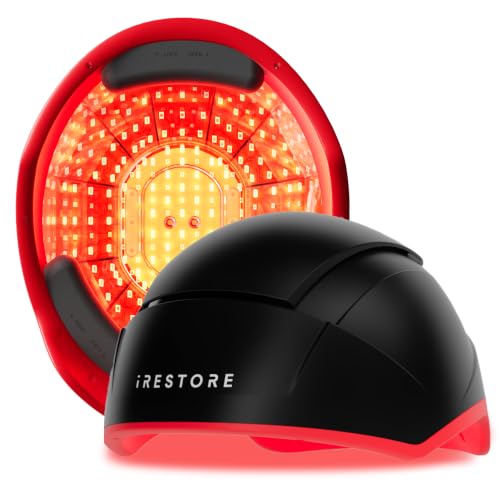
2. iRestore Elite Laser Hair Growth System – Best Premium Helmet
Overview: The iRestore Elite is a hands-free helmet that combines lasers and LEDs across three red wavelengths.
- Unmatched Hair Growth Technology: The iRESTORE Elite Laser Hair Growth Device offers advanced home treatment with 500 la…
- Proven Results: Experience the safest and most effective low-level red light therapy for hair growth with the iRESTORE E…
- Maximum Scalp Coverage: The iRESTORE Elite provides the best at home treatment with unmatched scalp coverage, reaching h…
Key specifications (manufacturer):
- 500 emitters: 300 laser diodes plus 200 LEDs
- 625, 655 and 680 nm wavelengths
- 2,500 mW total output; Class 3R lasers under 5 mW each
- 12-minute sessions
- Listed price on the iRestore site: about $1,799 (other reviewers list $1,899)
- 3-year warranty and a 12-month money-back guarantee listed by iRestore (one product manual we found states a 1-year warranty, so confirm at checkout)
- Described by the manufacturer as FDA 510(k) cleared
Main benefits:
- Extensive coverage, including toward the sides and crown.
- A long money-back window, which fits the slow pace of hair growth.
- Wireless battery operation.
Drawbacks:
- Among the most expensive devices here.
- Bulkier than a cap.
- The marketing around the triple-wavelength design shouldn’t be read as proof it outperforms single-wavelength devices. We found no head-to-head evidence.
- The company’s cited trial result (a 43.2% hair-count increase versus 5.7% for placebo) is a manufacturer claim and may not be specific to the Elite model.
Who should consider it: Shoppers wanting broad coverage, a generous return window and a helmet format.
Who should skip it: Budget-focused buyers or anyone who dislikes wearing something helmet-like.
Value assessment: High cost, strong warranty and return terms. Verify the model-specific FDA clearance in the FDA’s 510(k) database before purchase.
3. Kiierr Laser Cap Hair Growth System – Best Laser Cap for Value-Minded Shoppers
Overview: Kiierr sells laser caps in several sizes and diode counts: the 148 Pro, 272 Premier, 272 MD Elite and 302 MD Ultra Flex.
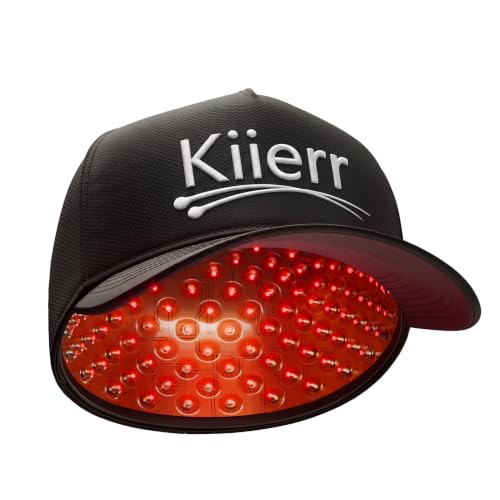
- 272 LASER DIODES: Designed to provide coverage across the upper scalp area.
- WEARABLE CAP DESIGN: Hands-free format for convenient use at home.
- 30-MINUTE SESSIONS: Review the included instructions before use.
Key specifications:
- All-laser design at 650 nm (± 5 nm in FDA records)
- 148 to 302 diodes, depending on model
- Sessions of about 30 minutes, roughly every other day, according to reviewer summaries (check the manual for your model)
- FDA 510(k) records list the Kiierr family including models 272 and 148
- 2-year warranty and a 7-month money-back guarantee, as described in third-party reviews
- Reported pricing: from about $799 to the mid-$900s for entry models, higher for larger caps
Main benefits:
- Lower entry price than most laser competitors.
- Multiple models let you pick coverage and budget.
Drawbacks:
- Long sessions compared with Capillus or HairMax.
- A Wareable hands-on review noted slow results and power-pack issues.
- A 7-month return window may be tight for lower-diode models, since hair growth can take longer to become visible.
Who should consider it: People who want a laser cap at a lower price and don’t mind half-hour sessions.
Who should skip it: Anyone who knows they’ll struggle with long, frequent sessions.
Value assessment: Good price-to-spec ratio on paper. Confirm which model’s clearance applies to the one you buy.
4. HairMax LaserBand 82 – Best for Targeted Scalp Treatment and Portability
Overview: HairMax pioneered consumer laser hair devices with its combs. The LaserBand 82 is a flexible band with hair-parting teeth that you glide across three areas of the scalp.

- VALIDATED BY CLINICAL TRIALS: Technology validated by 7 clinical studies, international medical device licenses, and 6 p…
- REGROW FULLER DENSER HAIR: Hairmax pioneered the use of nourishing and therapeutic laser light energy directly targeted …
- FAST TREATMENT & LIGHTWEIGHT: Regrow fuller, denser healthier hair. The treatment takes as little as 90 seconds, 3 times…
Key specifications:
- 82 medical-grade lasers; HairMax cites “246 laser coverage” when the band is moved over three scalp sections
- 655 nm (per a retailer listing; confirm in the manual)
- Treatment as short as 90 seconds, three times a week
- HairMax reports eight FDA 510(k) clearances across its product line
- Price listed by HairMax for the ComfortFlex version: $849 (older materials list $799)
- 6-month money-back guarantee; HairMax’s product page lists a 1-year warranty, while some retailers list 2 years, so verify
- Cordless and rechargeable
Main benefits:
- Very fast sessions and a small footprint, so it’s easy to travel with.
- The parting teeth are designed to move hair aside so light reaches the scalp, which matters for thick or dark hair.
Drawbacks:
- HairMax’s own comparison states the LaserBand treats the top of the head only, not the sides.
- Manual technique means results depend on how carefully you cover each area.
- Higher upfront price than some caps.
Who should consider it: People with thinning on the crown or top, or anyone who wants the quickest routine.
Who should skip it: Those with diffuse thinning at the sides, or anyone who prefers hands-free use.
Value assessment: Mid-to-high price, but the short time per session is real value for consistency.
5. Theradome PRO LH80 – Lowest Weekly Time Commitment
Overview: The Theradome PRO LH80 is a wireless laser helmet made in the U.S. The FDA’s 510(k) summary describes 80 laser diodes in a helmet form factor.

- Advanced Laser Technology for Hair Wellness: The Theradome Laser Hair Therapy Helmet uses medical-grade laser technology…
- Powerful & Targeted Light Therapy: Unlike other devices that mix lasers with LEDs, Theradome utilizes 40-80 premium lase…
- Full Scalp Coverage for Convenient Treatment: Theradome’s ergonomic helmet design ensures hands-free, full-scalp coverag…
Key specifications:
- 80 laser diodes at 678 nm (per the FDA 510(k) summary, K171775; some retailers list 655 nm, so trust the regulatory document)
- Class 3R lasers, 5 mW maximum per diode
- 20-minute automatic treatment
- Cleared for twice-weekly use
- Reported price: roughly $695 to $845 in U.S. comparisons (verify current pricing)
- 1-year warranty reported by comparison sites
- Weight listed around 672 grams
Main benefits:
- Only two sessions per week, which suits busy schedules.
- Voice-guided, tracked sessions.
Drawbacks:
- Shorter warranty than iRestore or Capillus.
- Fewer diodes than caps and helmets using 272+ emitters. Fewer diodes isn’t automatically worse, because power, spacing and design matter, but the specs are not equivalent.
- Heavier and bulkier feel.
Who should consider it: Shoppers who prefer twice-weekly sessions and a lower upfront cost than the premium helmets.
Who should skip it: Those wanting a longer warranty or an all-in-one app-style experience.
Value assessment: Mid-range price with a documented, model-specific FDA record.
6. CurrentBody LED Hair Growth Helmet – LED-Only, Full-Coverage Design
Overview: CurrentBody is best known for its LED face masks. Its hair helmet applies red LED light across the scalp in 10-minute, hands-free sessions.

- CurrentBody LED Hair Growth Helmet: An effective at-home hair growth solution
- Natural, cellular LED light therapy treatment for hair thickening and new hair growth
- 120 LED bulbs deliver 18 J/cm² of the precise red (660nm) wavelength
Key specifications (manufacturer):
- Red LED light at 620–660 nm
- The U.S. product page describes 120 evenly spaced LEDs (some third-party listings show 80, so confirm before buying)
- 10-minute sessions; recent pages mention 3 to 5 sessions per week, while older listings said daily, so follow the current manual
- Sold in medium and large sizes
- Described by the manufacturer as FDA-cleared
- Manufacturer claims include a 33% hair-count increase in 16 weeks, which is a company-reported figure
- Price, warranty and return terms: we couldn’t verify consistent current terms, so check the retailer page
Main benefits:
- Polished design, backed by a brand with a track record in LED devices.
- Sizing options for fit.
Drawbacks:
- LED-only. Most published trials used lasers, and one review of laser caps noted LEDs have less clinical backing. That doesn’t mean LEDs don’t work, but evidence is thinner.
- Reviewers describe the helmet as heavy and bulky.
- Premium price relative to other LED options.
Who should consider it: People who prefer LED technology, value design and are comfortable with a helmet.
Who should skip it: Anyone prioritizing laser-specific clinical evidence.
Value assessment: Pay for the brand and fit; weigh it against laser options.
7. HigherDOSE Red Light Hat – Best Comfortable Wearable
Overview: The HigherDOSE Red Light Hat looks like a baseball cap with 120 red LEDs inside.
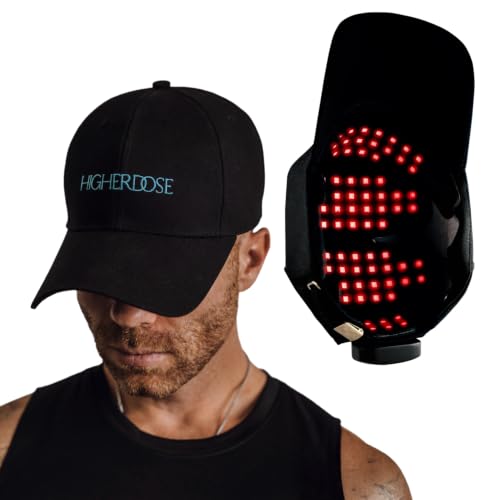
- Red Light Therapy to Support Hair Growth at Home – This cordless red light cap delivers targeted red light therapy for h…
- Hands-Free Hair Growth Cap – This wearable red light hat fits seamlessly into your daily routine, delivering convenience…
- Cordless Red Light Scalp Cap – This rechargeable LED red light therapy hat supports your hair wellness goals on the go. …
Key specifications:
- 120 LEDs at 650 nm ± 10 nm
- 10-minute automatic session
- Cordless and rechargeable
- Price listed by HigherDOSE: $449
- 1-year warranty and a 120-day money-back guarantee reported by a review site
- FDA 510(k) K242363 (cleared November 2024). The FDA summary describes the device for androgenetic alopecia, and it states no clinical data was included. Check the full indications statement in the FDA database for who it covers.
Main benefits:
- Soft, low-profile design that’s easy to wear around the house.
- Lowest price among the FDA-cleared devices here.
Drawbacks:
- LED-only, with no clinical data in its own 510(k) summary.
- Shorter money-back window than some competitors, which is a poor match for hair growth’s slow timeline.
Who should consider it: First-time buyers who want an affordable, comfortable way to try red light therapy.
Who should skip it: Anyone who wants laser technology or device-specific clinical trial data.
Value assessment: Lower price and comfort, with a thinner evidence trail.
Also Considered: Laduora Duo 4-in-1 Scalp and Hair Care Device
The Laduora Duo is a handheld, brush-style tool that combines red light (reported at 660 nm), blue light, sonic vibration, gentle warmth and serum pods. Laduora recommends about five minutes, three times a week, and lists a one-year warranty. The list price is about $299.95, plus ongoing serum pod costs.
We couldn’t verify an FDA 510(k) clearance for hair growth, so we treat it as a scalp-care accessory, not a clinical hair-regrowth device. If you’re dealing with moderate to advanced thinning, a cleared device is a better match. If you want a pleasant scalp routine, it may be a fun add-on.
[View current availability on Amazon: AMAZON AFFILIATE LINK – Laduora Duo]
LED vs Laser Hair Growth Devices – What Is the Difference?
| Factor | Laser devices | LED devices |
|---|---|---|
| Light type | Coherent, focused light | Broader, less focused light |
| Clinical research | Most published hair-growth trials involve lasers or laser-LED combinations | Fewer device-specific trials |
| Hair penetration | Narrow beams may pass through hair more easily | Light can scatter more; ISHRS notes hair color and density affect transmission |
| Heat and comfort | Typically cool; often more diodes needed for coverage | Can run warmer in some designs; often softer caps |
| Price | Usually higher | Usually lower |
| Safety classification | Class 3R lasers in several devices | Generally lower risk class |
| Best for | Buyers prioritizing clinical precedent | Buyers prioritizing comfort or lower cost |
According to ISHRS, early researchers weren’t sure whether laser light was required or whether any light source would do, and it turns out that both can work. That’s an important nuance: LED isn’t “fake,” but laser devices have more published trial history, and 510(k) clearance for LED devices can rest on equivalence rather than new clinical trials.
Hair Growth Helmets vs Laser Caps vs Comb Devices
| Format | Advantages | Disadvantages |
|---|---|---|
| Helmets (iRestore Elite, Theradome, CurrentBody) | Hands-free, broad coverage, consistent light distance | Bulkier, heavier, can feel warm |
| Caps (Capillus, Kiierr, HigherDOSE) | Lightweight, discreet under hats, often shorter sessions | Fit varies; coverage depends on diode layout |
| Bands and combs (HairMax LaserBand 82) | Fast sessions, portable, targeted passes through hair | Manual technique, may miss areas, top-of-head focus |
Which one is “best” depends less on the format than on whether you’ll use it. A bulky helmet that sits in a closet delivers nothing, and a light cap you wear while answering email may deliver more.
What Wavelength Is Best for Hair Growth?
There’s no single universally best wavelength. Here’s what the authoritative sources say.
ISHRS’s guide to red light therapy for hair loss notes that early research established positive effects at around 650 nm, in the red part of the visible spectrum. It also notes that a second wavelength near 808 nm, in the near-infrared range, has since shown beneficial clinical results.
The devices in this guide use:
- 650 nm: Capillus PRO, Kiierr, HigherDOSE
- 655 nm: HairMax LaserBand 82 (per retailer data)
- 625, 655 and 680 nm: iRestore Elite
- 678 nm: Theradome PRO LH80
- 620–660 nm: CurrentBody helmet
Because the clearances and trials rely on specific devices, never assume two products are equivalent simply because their wavelengths look alike. Output power, diode spacing, session length and how light gets through your hair all change the dose reaching follicles. ISHRS also points out that dark and dense hair reduces light transmission, which is one reason designs differ.
Near-infrared options (for example, Capillus Spectrum models using 808 nm) are interesting but newer. Check whether the specific model has its own clearance.
Are FDA-Cleared Red Light Hair Growth Devices Worth Buying?
You’ll see “FDA-approved” in plenty of ads. Technically, that’s usually wrong for these devices. Here’s the difference.
- FDA clearance (510(k)): The manufacturer shows that its device is substantially equivalent to a legally marketed device. FDA’s page on 510(k) clearances explains that manufacturers notify the agency before marketing a device so FDA can determine equivalence to a device already on the market.
- FDA approval (PMA): FDA’s overview of device approvals and clearances describes premarket approval as the most stringent pathway, based on sufficient valid scientific evidence that a device is safe and effective for its intended use.
So when a laser cap is “FDA-cleared,” that means it met the 510(k) standard, not that FDA independently confirmed it will regrow your hair. Even the PubMed review above uses “FDA-approved” in its title when it’s really talking about cleared devices, which shows how common the mix-up is.
Is clearance still worth looking for? Yes, with caveats. Clearance is a useful floor: it signals the device was reviewed for safety, defined intended use and manufacturing controls. It’s not a guarantee of results, and clearances are model-specific. A cap with 272 diodes may be cleared while a newer 308-diode version needs its own record. Search the FDA 510(k) database for the exact model before you buy. Be wary of products that say only “FDA-registered” or “FDA-compliant,” since those phrases don’t mean the same thing.
How to Choose the Best Red Light Therapy Device for Your Hair Type
Men with pattern hair loss. Male pattern loss typically recedes at the temples and thins at the crown. Look for devices whose clearance lists Norwood-Hamilton ranges that match your stage. Coverage of the crown and frontal hairline matters. A band such as the LaserBand 82 targets the top, while a helmet or cap covers more of the whole scalp.
Women with pattern hair loss. Female pattern hair loss usually shows as diffuse thinning at the part and crown while the frontal hairline is often preserved. Confirm the device is cleared for women (several are), and consider caps or helmets that cover the whole top of the head evenly. Also ask a clinician to rule out thyroid issues, iron deficiency or other contributors.
Fine and thinning hair. Light reaches the scalp more easily, so many designs should work. Comfort and session length often decide consistency.
Dense or thick hair. Hair can scatter and absorb light, so a lower-hair-contact design or parting teeth, like HairMax’s, can help. Make sure the cap or helmet sits against the scalp rather than on top of hair.
Dark hair or skin tones. ISHRS notes darker hair absorbs more light, and many clearances list Fitzpatrick skin types I to IV. If you have types V or VI, discuss options with a dermatologist.
Scalp coverage. Check where the light really goes: top only, full scalp or sides and back. More diodes don’t guarantee better coverage if the layout leaves gaps.
Budget and consistency. Plan for the total cost of ownership: device price, warranty length, return window and replacement batteries. Then ask the honest question: which device will I actually use three or more times a week for six months?
How Often Should You Use Red Light Therapy for Hair Growth?
It depends entirely on the device. Examples from manufacturers:
- Capillus PRO: daily, 6 minutes
- HairMax LaserBand 82: three times a week, as little as 90 seconds
- Theradome PRO LH80: twice a week, 20 minutes
- Kiierr: about 30 minutes, roughly every other day (check your model’s manual)
- iRestore Elite and CurrentBody: 12 and 10 minutes respectively, with manufacturer pages stating different frequencies over time, so follow the manual you receive
- HigherDOSE: 10 minutes per session
Remember the biphasic dose response: more isn’t automatically better. Using a device longer or more often than instructed may not help and could irritate your scalp. Set phone reminders and track your sessions. Many caps now do this for you.
How Long Does It Take to See Hair Growth Results?
Hair grows slowly (about half an inch a month, according to dermatology sources), so any treatment needs patience. Clinical trials for these devices typically run 16 to 26 weeks or more. Some people notice reduced shedding or better hair texture earlier, but visible density changes generally take several months, and some brands themselves suggest six months or longer for lower-diode models.
Some users also notice temporary extra shedding in the first weeks as weak hairs cycle out. If shedding is heavy or worrying, check in with a dermatologist.
Take baseline photos in the same lighting once a month. Judging progress in the mirror alone is unreliable.
If you stop treatment, benefits may fade, because pattern hair loss is progressive. Manufacturers such as HairMax say their devices must be used indefinitely to maintain results.
Potential Side Effects and Safety Considerations
Red light devices are generally considered low risk when used as directed, but there are things to keep in mind.
- Eye safety. Don’t look directly into laser diodes. Devices rated Class 3R warn against eye exposure, and several manufacturers advise consulting a doctor if you’re sensitive to light.
- Scalp sensitivity. Mild warmth, tingling or temporary redness can happen. Stop using the device if irritation persists.
- Follow the manual. Session length, frequency and age limits (iRestore states users must be at least 18) are there for a reason.
- Photosensitivity and medications. Some medications and skin conditions increase light sensitivity. Ask your doctor first.
- Inflammatory scalp conditions. Some clinicians caution against high-intensity lasers on scalp psoriasis or active inflammatory conditions.
- Pregnancy, cancer history or implanted devices. Ask your clinician before using any new device.
See a professional first if your hair loss is sudden, severe, patchy or unexplained; if your scalp is red, scaly, painful or scarred; or if hair is falling out after illness, childbirth or major stress. The American Academy of Dermatology notes that hair loss has many causes and that a board-certified dermatologist can identify the cause and recommend treatment, sometimes starting with blood tests. Scarring hair loss can become permanent if the follicle is destroyed, so early evaluation matters.
Can You Combine Red Light Therapy With Hair Growth Oils or Other Treatments?
Often, yes, and many hair specialists prefer red light as part of a plan rather than a solo effort. ISHRS-affiliated clinicians describe photobiomodulation as something that can be used alongside other therapies, and some small studies suggest benefits when combined with minoxidil. That said, the best combination depends on your diagnosis, which is why a professional treatment plan matters. A dermatologist may discuss topical or oral medications, in-office procedures or transplants alongside light therapy.
For daily scalp care, you may want to explore our guide to the best hair growth oils for a healthier scalp. Oils don’t treat the underlying cause of pattern hair loss, but a clean, comfortable scalp makes it easier to wear a device consistently. Practical tips:
- Apply oils after your light session, not before, unless the manufacturer says otherwise. Product on the scalp or hair can interfere with light reaching follicles.
- Introduce one change at a time so you can tell what’s helping or irritating.
- Keep your hair care gentle. Tight styles, harsh chemical treatments and excessive heat can damage hair, so choosing the right haircare tools can help protect the hair you’re trying to keep.
Common Mistakes to Avoid When Buying a Red Light Hair Growth Device
- Trusting “FDA-approved” language. Look for “FDA 510(k) cleared” and verify the exact model in FDA’s database.
- Buying on diode count alone. Diodes, power, spacing and coverage all matter. Compare full specifications.
- Assuming all LEDs and lasers are interchangeable. Evidence differs between them.
- Ignoring the return window. Hair growth is slow, and a short money-back period may expire before you can judge results.
- Skipping a diagnosis. If your hair loss isn’t pattern hair loss, red light may not help.
- Expecting results on bald skin. Light needs living follicles to work with.
- Inconsistent use. Missing sessions is the most common reason people don’t see benefits.
- Overlooking total cost. Add batteries, warranty length and any subscription extras.
- Falling for “miracle” marketing. Be skeptical of guaranteed regrowth claims or unusually large percentage gains.
- Buying a no-name cheap cap with no specs. If a listing hides wavelength, diode type or clearance, move on.
Frequently Asked Questions
1. Does red light therapy really regrow hair?
For some people with early to moderate pattern hair loss, clinical trials suggest it can increase hair density or thickness. Results vary, evidence quality differs by device, and it doesn’t work for all hair loss types or on bald skin.
2. What is the best red light therapy device for hair growth?
It depends on your priorities. In our editorial view, Capillus PRO is the best overall for its short sessions and documented clearance, iRestore Elite is the premium helmet pick, and HairMax LaserBand 82 is best for targeted, fast sessions.
3. Is an LED helmet better than a laser cap?
Not necessarily. Laser devices have more published trial history, while LED devices may be lighter and cheaper. Compare device-specific evidence, coverage and comfort rather than assuming one format wins.
4. How many times a week should you use red light therapy?
Follow your device’s manual: examples range from daily six-minute sessions to twice-weekly 20-minute sessions. Using a device more than instructed doesn’t necessarily improve results.
5. How long does it take to see results?
Most clinical studies run 16 weeks or more, and many people wait around six months to judge. Some notice reduced shedding sooner, but no timeline is guaranteed.
6. Is red light therapy safe for men and women?
Cleared devices are generally considered low risk when used as directed. Protect your eyes, stop use if your scalp becomes irritated, and consult a doctor if you have light sensitivity, a scalp condition or you’re pregnant.
7. Are FDA-cleared hair growth devices worth the money?
Clearance is a helpful baseline for safety and defined intended use, but it isn’t proof that a device will work for you. Worth depends on your hair loss type, budget and ability to use it consistently.
8. Can red light therapy help female pattern hair loss?
Several devices are cleared for women with pattern hair loss, and trials include female participants. Because thinning in women can have other causes, have a clinician check for thyroid, iron or hormonal contributors.
9. Can you use red light therapy with minoxidil?
Many clinicians use them together, and some research points to additional benefit from combining them. Ask your dermatologist about timing and scalp irritation before starting.
10. Does red light therapy work for completely bald areas?
Unlikely. Light therapy works on follicles that are still alive, including miniaturized ones. Smooth, shiny skin typically has no active follicles to stimulate.
11. What wavelength is best for hair growth?
No single wavelength is universally best. ISHRS highlights red light around 650 nm as the best-established range, with near-infrared around 808 nm also showing beneficial results.
12. Are inexpensive red light hair caps effective?
Some may be, but cheap caps often list no diode type, wavelength or FDA clearance, making them impossible to evaluate. A very low price with vague specs is a red flag.
Final Verdict – Which Red Light Therapy Device Should You Buy?
There’s no perfect device, only the best fit for your hair loss pattern, budget and routine. Here’s our summary:
- Best overall: Capillus PRO, for short daily sessions, a clear laser spec and a documented model-specific clearance.
- Best premium helmet: iRestore Elite, if you want broad coverage, a long money-back window and a three-year warranty and the price doesn’t scare you.
- Best for value-minded laser shoppers: Kiierr, with several diode options and lower entry pricing, though sessions are long.
- Best for targeted treatment and portability: HairMax LaserBand 82, if you have top-of-scalp thinning and want a 90-second routine.
- Best comfortable wearable: HigherDOSE Red Light Hat, with the caveat that its FDA summary lists no clinical data.
- Lowest weekly time commitment: Theradome PRO LH80, at two sessions per week.
- For LED fans: CurrentBody, if you prefer a polished LED helmet and accept thinner evidence than laser options.
Whichever you choose, check the return policy, verify the FDA record for the exact model, take baseline photos, and commit to at least six months before judging. If your hair loss is sudden, patchy or accompanied by scalp symptoms, start with a dermatologist.
When you’re ready, you can check current prices, compare available models or review each manufacturer’s specifications using the links above. We’ll keep updating this guide as devices and evidence change.
This article is for informational purposes and is not medical advice. Hair loss has many causes, and results vary. Talk with a qualified healthcare professional about your individual situation.