

Affiliate disclosure: Natural Skin Studio participates in the Amazon Services LLC Associates Program. If you buy through a link marked as an affiliate link, we may earn a small commission at no extra cost to you. As an Amazon Associate we earn from qualifying purchases. This never changes what we recommend.
Specifications, prices and policies in this guide were checked on November 15, 2026. They change often, especially around Black Friday, so confirm everything before buying.
Laser hair growth devices have moved from dermatology clinics into living rooms. Wearable caps, helmets and bands now promise thicker-looking hair from a few minutes of red light, with no prescription and no downtime. Interest is rising because many people want a non-surgical, drug-free option, or something to use alongside medication.
These products rely on low-level laser therapy (LLLT), also called photobiomodulation: low-power red light aimed at the scalp. The best-supported use is hereditary pattern hair loss (androgenetic alopecia) in its early to moderate stages. It is not a cure, results take months, and it will not regrow hair on a smooth, bald scalp.
This guide compares seven popular laser hair growth devices using manufacturer specifications, FDA records, published research and retailer data. We have not hands-on tested these devices. Where a detail could not be verified, we say so.
Quick Picks – Best Laser Hair Growth Devices in 2027
| Product | Best for | Device type | Light technology | Diode count | Treatment time | Verified price | FDA clearance status |
|---|---|---|---|---|---|---|---|
| iRestore Elite | Premium, maximum coverage | Helmet | Laser + LED; 625/655/680 nm | 500 (300 laser, 200 LED) | 12 min daily | $1,799 (irestorelaser.com sale price) | FDA-cleared (510(k)) per manufacturer |
| Kiierr 272 Premier | Laser cap value | Cap | Laser only; 650 nm | 272 | 30 min every other day | $1,199 promo (listed $1,799), per deal coverage; not checked on kiierr.com | 510(k) K181878 (272 Premier and 148 Pro, 2018) |
| Capillus PRO | Short sessions | Cap | Laser only; 650 nm | 272 | 6 min daily | $1,699 (capillus.com) | FDA-cleared per manufacturer; K number not located |
| HairMax PowerFlex 272 | Flexible fit | Cap | Laser only; 650–655 nm (page lists both) | 272 | 7 min, 3x weekly | $1,799 regular (hairmax.com); showed as unavailable when checked | FDA-cleared per manufacturer |
| Theradome PRO LH80 | Low weekly frequency | Helmet | Laser only; about 678–680 nm | 80 | 20 min, 2x weekly | About $845–$899 (retailer listings; not verified on theradome.com) | FDA-cleared per manufacturer and dealers; K number not verified |
| Illumiflow 272 Pro | Budget-minded buyers | Cap | Laser only per listings; wavelength not verified | 272 | 15–30 min, about 3x weekly (listings vary) | Not verified (marketplace listings seen at $695–$925, often out of stock) | Listed as FDA-cleared; clearance number not verified |
| HairMax LaserBand 82 | Fastest sessions, travel | Handheld band | Laser only; 655 nm | 82 | About 90 sec, 3x weekly | $799 list (HairMax comparison page); $849 at some retailers; availability unconfirmed | FDA-cleared per manufacturer |
The “best for” labels are editorial categories, not clinical rankings. No head-to-head trial has shown that any one of these devices grows more hair than another.
Best Laser Hair Growth Devices in 2027 – Detailed Reviews
iRestore Elite – Best Premium Laser Hair Growth Device
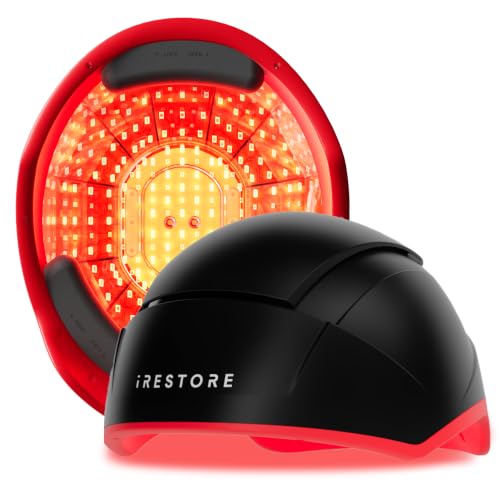
- Unmatched Hair Growth Technology: The iRESTORE Elite Laser Hair Growth Device offers advanced home treatment with 500 la…
- Proven Results: Experience the safest and most effective low-level red light therapy for hair growth with the iRESTORE E…
- Maximum Scalp Coverage: The iRESTORE Elite provides the best at home treatment with unmatched scalp coverage, reaching h…
Overview. The iRestore Elite is a helmet-style device that combines laser diodes with LEDs, which the company calls Lumitech. It has the highest diode count in this guide and is aimed at buyers who want the broadest scalp coverage, including the hairline and temples.
Main specifications.
- 500 diodes: 300 lasers and 200 LEDs
- Wavelengths: 625, 655 and 680 nm
- Total output: 2,500 mW; laser diodes are Class 3R (under 5 mW each)
- Weight: 1.20 lb
- Warranty: 3 years (optional 5-year upgrade for $99 at checkout)
- Guarantee: 12-month money-back guarantee, subject to the return policy
Features and benefits. An extended-coverage design, a timer controller and a rechargeable battery option (wireless upgrade is +$99; the base version plugs in). The long guarantee window is helpful because hair results take months.
Limitations. It is the most expensive device here and needs a 12-minute session every day. Higher diode counts and power are not proven to produce better results. The company cites its own double-blind study (a 43.2% hair-count increase versus 5.7% for placebo at 16 weeks), but that is manufacturer-reported data.
Treatment routine. 12 minutes daily, about 84 minutes per week. iRestore says to use it on a clean, dry scalp and apply products afterward.
Price and value. $1,799 on irestorelaser.com during our check. The “total value” of $2,699 shown there is a marketing comparison, not a standard selling price. A third-party store listed it at $1,999.
Who should consider it. Shoppers with widespread early thinning who want maximum coverage and the longest return window.
Who should avoid it. Anyone with a completely bald scalp or advanced loss (iRestore says the device is not intended for that), people with Fitzpatrick skin types V–VI, and budget-focused buyers.
Kiierr 272 Premier – Best Laser Hair Growth Cap
Overview. The Kiierr 272 Premier is a baseball-cap-style, laser-only device. Its FDA 510(k) record (K181878, dated May 2018) covers the 272 Premier and the 148 Pro.
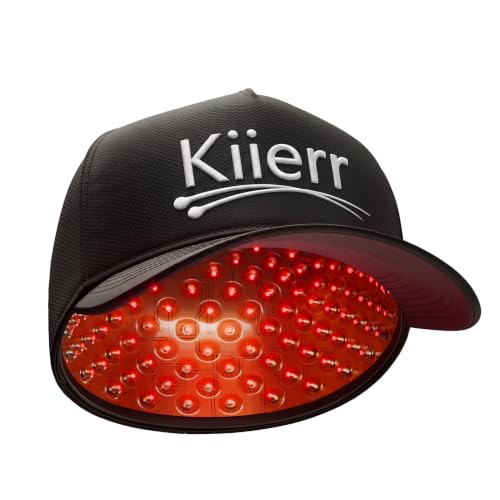
- 272 LASER DIODES: Designed to provide coverage across the upper scalp area.
- WEARABLE CAP DESIGN: Hands-free format for convenient use at home.
- 30-MINUTE SESSIONS: Review the included instructions before use.
Main specifications.
- 272 laser diodes at 650 nm
- 30-minute auto-timed sessions
- Rechargeable battery pack
- Warranty and guarantee: we could not confirm current terms on the manufacturer’s site. Retailer pages mention a results guarantee of roughly 7 months and one listing mentions a 2-year warranty. Verify before buying.
Features and benefits. A discreet cap shape, laser-only technology, and a lower promotional price than the other 272-laser caps here.
Limitations. Sessions are the longest in this guide. Deal coverage in November 2026 showed $1,199 against a listed $1,799, so the real price depends on timing.
Treatment routine. 30 minutes every other day (roughly 90–120 minutes weekly). The user manual describes an initial 16-week course.
Price and value. Good value if the promotional price holds and the terms check out.
Who should consider it. Buyers who want a laser cap rather than a helmet and can commit to longer sessions.
Who should avoid it. Anyone who wants short sessions or who cannot confirm warranty and return terms first.
Capillus PRO – Best for Short Treatment Sessions
Overview. Capillus PRO is a laser-only cap that treats the scalp in six minutes a day, the shortest daily session of any cap here.

Main specifications.
- 272 laser diodes, 5 mW each, 650 nm, 1,360 mW total
- Auto shut-off after 6 minutes
- Warranty: 3 years on the device, 1 year on the battery pack and adapter
- Guarantee: 6-month satisfaction guarantee, only on purchases made directly from capillus.com; you pay return shipping and a 25% service fee applies
Features and benefits. Light, flexible and easy to wear under a hat, with an app for reminders and progress photos. Capillus cites a published study of this model showing a 51% average increase in hair count after 17 weeks. That figure comes from the company, and it says other Capillus models have not been tested in trials.
Limitations. A daily routine is required. The battery life is not stated on the page we checked, and some owner reviews report battery complaints.
Treatment routine. 6 minutes daily (about 42 minutes weekly). Capillus warns that using it longer will not increase the effect.
Price and value. $1,699 on capillus.com. A replacement battery pack with adapter is listed at $129.
Who should consider it. People who value short, discreet daily sessions.
Who should avoid it. Anyone who dislikes daily routines, or who plans to buy elsewhere and rely on the 6-month guarantee, which does not cover other retailers.
HairMax PowerFlex 272 – Best Flexible Laser Cap
Overview. HairMax is one of the oldest names in home laser therapy. The PowerFlex 272 is a laser-only cap with a flexible silicone liner and a cordless design.

- VALIDATED BY CLINICAL TRIALS: Technology validated by 7 clinical studies, 14 international medical device licenses, and …
- REGROW FULLER DENSER HAIR: The Hairmax Laser Cap PowerFlex 272 applies clinically proven therapeutic laser light to the …
- FAST TREATMENT & COMFORT: Achieve clinically proven results with just 3 weekly treatments of 7 minutes. Featuring 272 me…
Main specifications.
- 272 laser diodes, Class 3R, 1,360 mW total
- Wavelength: HairMax’s page lists both 650 nm and 655 nm
- Warranty: 1 year
- Guarantee: 6 months, with a 20% return shipping and handling fee
- FDA-cleared; HairMax states the indication (see the FDA section below)
Features and benefits. Fast 7-minute sessions three times a week, rechargeable battery, controller with timer, sports cap and travel case. HairMax reports seven clinical studies with 460 participants and an average of 129 new hairs per square inch at six months. These are company-reported results.
Limitations. The warranty is short for the price. On November 15 the official page listed the device as unavailable, and HairMax also promotes a newer Lumina 272 that we did not review. The product page is inconsistent about the exact schedule (three days a week versus every other day), so check the manual.
Treatment routine. 7 minutes, three days a week (about 21 minutes weekly).
Price and value. $1,799 regular price on hairmax.com; promotions have shown lower prices.
Who should consider it. Buyers who want short weekly time and a comfortable, flexible fit.
Who should avoid it. Anyone who wants a longer warranty or needs a device in stock today.
Theradome PRO LH80 – Best Laser Hair Growth Helmet
Overview. The Theradome PRO LH80 is a cordless laser-only helmet. It has far fewer diodes than the 272-laser caps, which shows why diode count alone does not decide quality: the device is built around a different dosing schedule.

- Advanced Laser Technology for Hair Wellness: The Theradome Laser Hair Therapy Helmet uses medical-grade laser technology…
- Powerful & Targeted Light Therapy: Unlike other devices that mix lasers with LEDs, Theradome utilizes 40-80 premium lase…
- Full Scalp Coverage for Convenient Treatment: Theradome’s ergonomic helmet design ensures hands-free, full-scalp coverag…
Main specifications.
- 80 laser diodes; retailers list about 678 nm, while the manual’s laser label states 680 nm at 5 mW
- Weight: about 672 g (Amazon listing data)
- Warranty: 1-year limited, per the user manual; an extended plan is for U.S. customers only
- Refund policy: the manual references one, but we could not retrieve its terms
Features and benefits. Voice-guided, automatically timed sessions and only twice-weekly use make it the lowest-effort routine among the helmets.
Limitations. Lowest diode count, short warranty, and we could not verify current pricing on Theradome’s own site.
Treatment routine. 20 minutes, twice a week (about 40 minutes weekly).
Price and value. Roughly $845–$899 on U.S. retailer listings, the lowest price among the better-documented devices here.
Who should consider it. Shoppers who want a cordless helmet, a lower price and fewer sessions per week.
Who should avoid it. Anyone who wants a long warranty or verified guarantee terms.
Illumiflow 272 Pro – Best Alternative Laser Cap
Overview. The Illumiflow 272 Pro is a laser-only cap pitched as a lower-cost alternative to the better-known brands. We could not retrieve Illumiflow’s own product page, so this review relies on retailer listings and owner reviews.
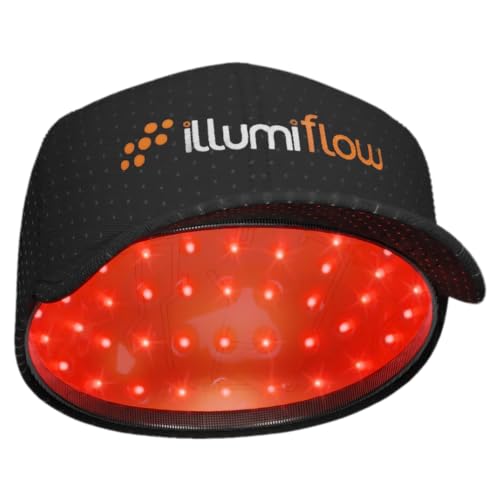
- Advanced Hair Growth Technology At Home: The illumiflow 272 Laser Cap is The Original OTC (Over-the-Counter) Solution to…
- Safe & Effective FDA Cleared Hair Growth System: If you are one of the millions of men and women struggling with embarra…
- Affordable, Pain-Free & Clinically Proven Tech: Get ahead of your genetic disposition to thinning hair, receding hairlin…
Main specifications (as listed by retailers).
- 272 laser diodes with a 30-minute auto shut-off timer
- Sessions of 15–30 minutes, about three times weekly (listings vary)
- Warranty: “5-year” in an Amazon listing title; guarantee: “100% money back” in the company’s Trustpilot profile text. Neither is verified against official terms.
- Wavelength and FDA 510(k) number: not verified
Features and benefits. A low price relative to other 272-laser caps and generally positive owner reviews. Some owners report replacement battery packs, and several describe responsive customer service.
Limitations. Unverified specifications and price. One reviewer noted a label reading “Kiierr International LLC DBA Illumiflow”. We could not confirm that link, so ask the seller for the exact 510(k) number.
Treatment routine. Roughly 45–90 minutes weekly, depending on the schedule you follow.
Price and value. Marketplace listings we saw ranged from $695 to $925 and were frequently out of stock, so treat the price as unconfirmed.
Who should consider it. Price-focused buyers willing to verify warranty, return terms and clearance themselves.
Who should avoid it. Anyone who needs confirmed specifications before spending $700 or more.
HairMax LaserBand 82 – Best Laser Hair Growth Band

- VALIDATED BY CLINICAL TRIALS: Technology validated by 7 clinical studies, international medical device licenses, and 6 p…
- REGROW FULLER DENSER HAIR: Hairmax pioneered the use of nourishing and therapeutic laser light energy directly targeted …
- FAST TREATMENT & LIGHTWEIGHT: Regrow fuller, denser healthier hair. The treatment takes as little as 90 seconds, 3 times…
Overview. The LaserBand 82 is a handheld band with hair-parting teeth. You move it across three scalp areas, so sessions are very short.
Main specifications.
- 82 laser diodes at 655 nm; HairMax cites 1,230 mW “comparative” output (a company-defined figure, not directly comparable to the total power of caps)
- About 90 seconds per session, three times weekly
- Built-in rechargeable battery, cordless
- Guarantee: 6 months (20% return shipping and handling fee). Warranty: one retailer lists 2 years; confirm with HairMax.
Features and benefits. The quickest routine in this guide (about 4–5 minutes weekly), highly portable, and lower in price than the cap-style devices.
Limitations. It is not hands-free, and coverage depends on your technique. We could not confirm that HairMax is currently selling the LaserBand 82: two retailers list it as unavailable. Confirm stock before planning around it.
Treatment routine. About 90 seconds, three times a week.
Price and value. $799 list on HairMax’s comparison page; some retailers charge $849.
Who should consider it. Busy people and frequent travelers who prefer a handheld tool.
Who should avoid it. Anyone who wants hands-free treatment or has difficulty holding a device steady across the scalp.
How Do Laser Hair Growth Devices Work?
Low-level laser therapy, also called photobiomodulation, exposes the scalp to red or near-infrared light at power levels too low to heat or damage tissue. The consumer devices above cluster around 625–680 nm. Researchers think the light acts on cellular energy production, circulation and the signals that keep follicles in their growth phase, but the exact mechanism is still not fully understood. Practical Dermatology’s overview of device-based hair restoration describes photobiomodulation as one of the most extensively studied device-based hair treatments, notes the mechanism remains incompletely understood, and says visible improvement generally takes several months of consistent use.
These devices differ from ordinary red-light hats. Many generic LED caps have no FDA clearance for hair loss, no published testing of their exact settings, and no defined dosing. The American Academy of Dermatology advises choosing a device made for the concern you want to treat. See the AAD’s guide to red light therapy for its precautions, including extra care for darker skin tones and for light-sensitive conditions or medications.
Laser vs LED Hair Growth Devices – What Is the Difference?
Laser diodes emit a narrow, focused beam of a single wavelength. LEDs emit broader, more diffuse light. HairMax and Capillus argue lasers penetrate deeper and are more effective. iRestore argues LEDs fill gaps between lasers and that lasers have not been shown to be clinically superior.
Both claims come from manufacturers selling a particular design. We did not find a head-to-head trial that settles the question, and published reviews often pool laser and LED results. Because light scatters in tissue, how much beam coherence matters at the follicle is also debated.
In practice, treat the technology as one factor, not the deciding one. Check whether the exact model is FDA-cleared for hair loss, how long and how often you must use it, and what the warranty covers. A “laser-only” label does not mean better results, and neither does a higher diode count.
Are Laser Hair Growth Devices FDA Approved or FDA Cleared?
Most are FDA-cleared, not FDA-approved. Approval (premarket approval) is reserved for high-risk devices. These caps and helmets are Class II devices cleared through the 510(k) pathway, where a manufacturer shows its device is substantially equivalent to a previously cleared one. Clearance supports safety for the stated use but does not prove that a device works better than others. Even published papers sometimes say “approved”, so the wording is used loosely.
To verify a device:
- Find the 510(k) “K number” in the manual or ask the seller for it.
- Search it in the FDA’s 510(k) Premarket Notification database and confirm the exact model name is listed.
- Check the product code (OAP) and regulation (21 CFR 890.5500, infrared lamp).
- Read the indications: for these devices, men with Norwood-Hamilton IIa–V, women with Ludwig-Savin I–II (or frontal patterns) and Fitzpatrick skin types I–IV.
As an example of why model-level checks matter, look at FDA 510(k) K253231. It clears a “Laser Hair Growth System” (Laser Cap 128 and Laser Helmets 272, 352, 500 and 552) from Hubei Yjt Technology, with a decision date of June 16, 2026 in the FDA database. It is not one of the seven devices reviewed here. It shows that clearance attaches to the named models and applicant, and that white-label devices can hold their own clearances. A lookalike product sold under another brand name is not automatically covered.
What Does Clinical Research Say About Laser Hair Growth?
A systematic review and meta-analysis of FDA-cleared home-use LLLT devices examined 135 articles and pooled seven double-blind randomized controlled trials. It reported increased hair growth in men and women with both comb-type and helmet-type devices. A later meta-analysis in Dermatologic Surgery pooled 38 studies (3,098 patients, mostly androgenetic alopecia) and found significantly higher hair density versus placebo over 4–26 weeks, but with high heterogeneity and too little data on other alopecia types. An older 2017 meta-analysis in the Journal of the American Academy of Dermatology also supported LLLT in men.
The AAD’s hair loss treatment page is more cautious: it says a few studies suggest laser therapy may help hereditary hair loss and that no single treatment works for everyone. The AAD’s red-light page adds that studies are designed differently and cannot be directly compared, that results come from some but not all studies, and that long-term effects are unknown.
Important limits to keep in mind:
- Results vary. Hair-count percentages from manufacturer studies (for example 43.2% and 51%) are not the same as visible density, and individual responses differ.
- Short trials. Most studies run 16–26 weeks.
- Conflicts of interest. The headline results in marketing, including those above, are company-reported. Check each paper’s funding and disclosures.
- No head-to-head evidence. Without trials comparing brands directly, no device can honestly be called clinically superior.
Who Should Use Laser Hair Growth Devices?
The strongest evidence is for early to moderate male pattern hair loss and female pattern hair loss, where follicles are thinning but still alive. People who want a non-invasive option, or an add-on to other treatment, are the typical candidates. In FDA terms, that means men at Norwood-Hamilton IIa–V and women at Ludwig-Savin I–II.
Not every cause of hair loss responds. Alopecia areata, scarring alopecias, and shedding after pregnancy, illness or rapid weight loss need different approaches, and the AAD notes that some shedding regrows on its own. Because the AAD says effective treatment begins with finding the cause, see a board-certified dermatologist before spending $1,000 or more.
Laser Hair Growth Devices vs Minoxidil – Which Is Better?
Neither is clearly “better”. They work differently and suit different people.
- Mechanism. Minoxidil is an FDA-approved topical drug applied to the scalp. Laser devices deliver light.
- Evidence. The AAD says minoxidil results usually take about 6 to 12 months and that it tends to work better alongside another treatment. In one study the AAD describes, LLLT was about as effective as minoxidil. A review of LLLT notes one study where combining the two worked better than either alone.
- Convenience. Minoxidil costs far less upfront but means daily application. Devices cost much more upfront but add no ongoing product cost.
- Limitations. Both need months of consistency, and results fade if you stop.
Many people combine them, and HairMax and iRestore both say their devices can be used with minoxidil. Do not stop a prescribed treatment to switch to a device. Ask your dermatologist how to combine them.
How to Choose the Best Laser Hair Growth Device
- Diode count. More diodes can mean denser coverage, but it is not proof of better growth. The Theradome has 80 diodes and the iRestore Elite 500, and neither has been shown superior.
- Wavelength. Most devices use red light around 650–680 nm. Check it matches the cleared model.
- Treatment frequency. This is the biggest lifestyle difference (table below). Choose a routine you will actually keep.
- Scalp coverage. Helmets and caps cover most of the scalp hands-free. A band depends on your technique.
- Comfort and battery life. Look at weight, fit and whether it is cordless. Battery life is not clearly published for several models, so read owner reviews.
- FDA clearance. Confirm the exact model’s 510(k) record.
- Warranty and return policy. Guarantee windows range from 6 to 12 months, and fees and “buy direct only” rules apply.
- Overall value. Weigh upfront price, weekly time and warranty together.
| Device | Typical weekly time | Warranty (as verified) | Guarantee (as verified) |
|---|---|---|---|
| iRestore Elite | About 84 min | 3 years | 12 months |
| Kiierr 272 Premier | About 90–120 min | Not verified | Not verified |
| Capillus PRO | About 42 min | 3 years (battery and adapter 1 year) | 6 months, direct purchase only |
| HairMax PowerFlex 272 | About 21 min | 1 year | 6 months |
| Theradome PRO LH80 | About 40 min | 1 year | Not verified |
| Illumiflow 272 Pro | About 45–90 min | Not verified | Not verified |
| HairMax LaserBand 82 | About 4–5 min | Not verified (a retailer lists 2 years) | 6 months |
Are Laser Hair Growth Devices Worth the Money?
They can be, if you have the right type of hair loss, set realistic expectations and use the device consistently. Plan for at least four to six months before judging, and treat the result as thicker or slower-thinning hair rather than a restored hairline. The AAD notes that hair loss continues over time, so follow-up treatment is usually needed.
Upfront prices in this guide run from about $800 to $1,800. Spread over three years, that is roughly $22–$50 per month (for example, $1,699 divided by 36 months is about $47). Long-term costs include replacement batteries (Capillus lists a battery pack and adapter at $129) and optional warranty upgrades (iRestore’s 5-year plan is $99). The guarantee window also matters: a 6-month guarantee ends around the time results become visible, while a 12-month window gives more room.
Can You Combine Laser Hair Growth Devices With Hair Growth Oils?
Often, yes, but they do different jobs. Scalp oils are topical products meant to condition the scalp and hair. Laser devices deliver light to follicles. Oils do not replace light treatment, and an oil is not FDA-cleared as a device.
Timing matters. iRestore advises using the device on a clean, dry scalp and applying products afterward, because product on the scalp can block some light. Capillus warns against combining its device with photosensitizing products. If you want a gentler scalp routine alongside your device, see our guide to hair growth oils, and patch-test anything new.
Common Mistakes to Avoid When Buying Laser Hair Growth Devices
- Assuming a higher diode count or power figure means better results.
- Skipping the dermatologist visit and treating the wrong type of hair loss.
- Not checking that the exact model has a 510(k) record.
- Confusing “FDA-cleared” with “FDA-approved” or “clinically proven” with “proven to beat other brands”.
- Buying from a third-party seller and losing the manufacturer’s guarantee (Capillus’s guarantee covers direct purchases only).
- Judging results after two months. Plan on four to six months or more.
- Choosing a routine you cannot keep, such as 30-minute sessions every other day.
- Believing “total value” or “% off” figures, which are not standard selling prices.
Frequently Asked Questions
1. Do laser hair growth devices really work?
For early to moderate pattern hair loss, controlled studies and meta-analyses suggest they can improve hair density. Evidence is limited by short trials, manufacturer involvement and differing designs. Results vary and are never guaranteed.
2. What is the best laser hair growth device in 2027?
No single device is proven best. For short daily sessions, Capillus PRO is our pick. For the least weekly time, the HairMax LaserBand 82 (if available). For maximum coverage, iRestore Elite. See the Final Verdict below.
3. How long does it take to see results?
Plan for several months. Practical Dermatology says visible improvement generally takes several months, and Capillus’s cited study measured at 17 weeks. Many users judge results at six months or later.
4. Are laser hair growth caps FDA cleared?
The caps in this guide are marketed as FDA-cleared. Kiierr’s 272 Premier has a verified 510(k) record (K181878). For the others, ask for the K number and confirm it in the FDA database.
5. Is a laser cap better than a laser helmet?
We found no head-to-head evidence. The choice is about comfort, session length, fit and cost. The 2021 meta-analysis reported benefit with comb and helmet-type designs.
6. How many times per week should you use a laser hair growth device?
Follow your model’s manual: Capillus daily, iRestore Elite daily, HairMax PowerFlex 272 three times weekly, Theradome twice weekly, Kiierr every other day. More use does not mean better results.
7. Can women use laser hair growth devices?
Yes, within the cleared indication: women with Ludwig-Savin I–II or frontal-pattern loss and Fitzpatrick skin types I–IV. Talk to a dermatologist first, especially if you are pregnant or hair loss started suddenly.
8. Can laser therapy regrow hair on a completely bald scalp?
Unlikely. The devices work on thinning follicles that are still alive. iRestore itself states that its device is not intended for people who are bald or have advanced loss.
9. Can you use laser hair growth devices with minoxidil?
Many people do, and manufacturers say it is acceptable. The AAD says red light is often used as a complement to standard therapy. Confirm your plan with your dermatologist.
10. Are expensive laser hair growth devices worth buying?
Not necessarily. Price and diode count have not been shown to predict results. A device you use consistently with solid warranty terms is the better value.
11. Are LED hair growth devices as effective as laser devices?
Unproven either way. Manufacturers disagree, and we found no direct comparison. Look for FDA clearance for hair loss rather than assuming a technology wins.
12. What happens if you stop using a laser hair growth device?
Hair loss from pattern baldness is ongoing, so gains are likely to fade over time. The AAD notes follow-up treatment is needed because we continue to lose hair.
Final Verdict – Which Laser Hair Growth Device Should You Buy in 2027?
- Short daily sessions, discreet cap: Capillus PRO ($1,699). Strong documentation and a 3-year warranty, but buy direct to keep the guarantee.
- Least weekly time: HairMax LaserBand 82 (about $799), if you can confirm it is in stock and can manage a handheld routine.
- Maximum coverage and longest guarantee: iRestore Elite ($1,799), if you accept 12-minute daily sessions and the price.
- Lower-cost laser cap: Kiierr 272 Premier (about $1,199 on promotion) or Illumiflow 272 Pro, but verify warranty, return terms and the 510(k) number before buying.
- Twice-weekly helmet at a lower price: Theradome PRO LH80 (about $845–$899), accepting the 1-year warranty.
- Flexible fit, short sessions: HairMax PowerFlex 272, once it is back in stock.
Whichever you choose, see a board-certified dermatologist first, buy from an authorized seller, and commit to the routine for at least six months. The best device is the one you will use consistently.
This article is for general information and is not medical advice. Individual results vary and are not guaranteed. Natural Skin Studio earns commissions from qualifying purchases made through affiliate links.