
Affiliate disclosure: Natural Skin Studio is a participant in the Amazon Services LLC Associates Program. If you buy through links on this page, we may earn a commission at no extra cost to you. This never changes how we research or rank products. This article is educational and is not medical advice.
Thinning hair is rarely just a cosmetic worry, and that is why the best premium laser hair growth caps have moved from dermatology clinics into home routines. Instead of a daily topical or a prescription, you wear a dome that delivers low-level laser therapy (LLLT) to the scalp for a few minutes at a time. Laser caps have limits, though: no device is a guaranteed cure, and results vary from person to person.
The category is also crowded with confusing claims. Inexpensive red-light hats typically use a small number of LEDs, and many carry no FDA 510(k) clearance for hair growth. Premium caps use true laser diodes, usually 80 to 312 of them, and each model discussed here has been through (or is marketed as having been through) the FDA’s 510(k) process. Since higher prices don’t automatically mean better results, this guide compares real specifications, keeps laser diodes and LEDs separate, and flags every claim we could not verify. If your hair loss is sudden, patchy, or unexplained, see a board-certified dermatologist first. The American Academy of Dermatology’s hair loss diagnosis and treatment guide explains why finding the cause comes before choosing a treatment.
Quick Comparison of the Best Premium Laser Hair Growth Caps
| Product | Technology | Laser diode count | Wavelength | Treatment time | FDA clearance status | Approx. price* | Best for |
|---|---|---|---|---|---|---|---|
| Capillus PRO | Laser-only cap | 272 | 650 nm | 6 min daily | Cleared: 510(k) K163170 lists the Capillus 272 Pro | ~$1,000–$1,700 | Shortest daily sessions |
| Capillus Spectrum | Laser-only, dual wavelength | 312 (about 272 red + 40 near-infrared per Capillus) | 650 + 808 nm | 6 min daily | Capillus states cleared; we could not confirm the 808 nm model in the FDA record | ~$2,150–$2,700 | Buyers who want the most advanced Capillus |
| iRestore Elite | Laser + LED helmet | 300 (plus 200 LED-type diodes) | 625, 655, 680 nm | 12 min daily | Cleared: K222081 | ~$1,800–$1,900 | Hands-free helmet with broad coverage |
| Kiierr 272 Premier | Laser-only cap | 272 | 650 nm | 30 min every other day | Cleared: K181878 | ~$1,000–$1,800 | High laser count at promotional prices |
| HairMax PowerFlex 272 | Laser-only cap | 272 | 650 nm per HairMax specs (verify at purchase) | 7 min, 3x weekly | Cleared: K180885 covers HairMax Laser 272, 202 and 80 | ~$1,500–$1,900 | Few, short weekly sessions |
| Theradome PRO LH80 | Laser-only helmet | 80 | about 678–680 nm | 20 min, 2x weekly | Manufacturer states cleared; LH80 record not verified here | ~$900–$1,000 | Fewest sessions per week |
| illumiflow 272 Pro | Laser-only cap | 272 | 650 nm | 30 min every other day | Cleared: K162071 (illumiflow Laser Cap) | ~$800–$1,000 | Value and long warranty |
*Approximate list or typical prices seen during our research. They change often with promotions, so check the latest price on Amazon.
Best Premium Laser Hair Growth Caps – Detailed Reviews
We did not personally test these devices. Specifications come from manufacturer pages and FDA records, and we label manufacturer claims as such.
1. Capillus PRO Laser Hair Growth Cap
The Capillus PRO is a flexible laser dome that fits inside a baseball-style cap, built for a quick daily routine.

- Technology: 272 laser diodes, no LEDs (per Capillus). About 1,360 mW of total laser output, per the manufacturer.
- Wavelength: 650 nm.
- Session and frequency: 6 minutes, daily (manufacturer recommendation).
- FDA status: The FDA 510(k) record K163170, dated January 31, 2017, lists the Capillus 272 Pro among cleared models for over-the-counter use.
- Price and availability: Capillus lists about $1,699 on its own store; lower promotional prices appear elsewhere. Check current availability on Amazon.
- Warranty and refund: 3-year limited warranty on the cap (1 year on battery and adapter) and a 6-month satisfaction guarantee, per Capillus.
Advantages: The shortest daily session in this group, laser-only design, and a long regulatory history. Disadvantages: A high price and a daily habit. The 510(k) summary for the earlier Capillus 272 Pro describes a double-blind, placebo-controlled trial using 30-minute sessions every other day, so the current 6-minute schedule is the maker’s recommendation, and you should ask what data supports it.
Who should buy it: People who want the quickest routine. Who should avoid it: Anyone with skin phototypes V–VI or advanced baldness, which fall outside the cleared indications. Value: Strong if convenience is your priority; you pay a premium for time savings.
2. Capillus Spectrum Laser Cap
The Spectrum is Capillus’s dual-wavelength flagship, adding near-infrared lasers to the red diodes.
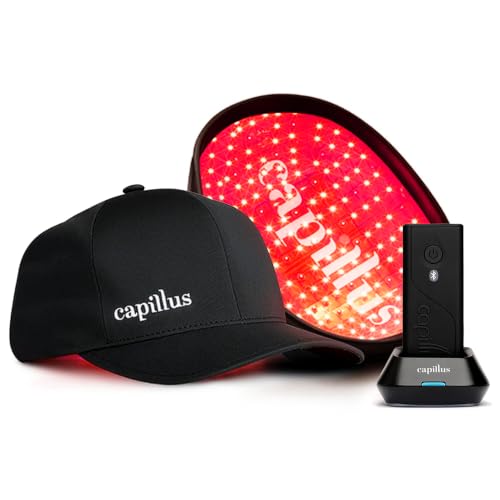
- Advanced Red Light Cap for Hair Regrowth: Capillus Spectrum brings professional-level red light therapy right to your ho…
- Real Lasers, Not LEDs: 312 medical-grade laser diodes (272 red, 40 near-infrared, 5 mW each) cover your full scalp. Beca…
- 6 Minutes a Day, Hands-Free: Follow the Capillus Protocol by wearing the laser hair growth cap while you work, read, wat…
- Technology: 312 laser diodes. Capillus describes this as roughly 272 red (650 nm) plus 40 near-infrared (808 nm), with no LEDs.
- Session: 6 minutes, daily.
- FDA status: Capillus markets it as FDA-cleared. The K163170 record lists a Capillus312 using 650 nm lasers, but we could not confirm that record covers the 808 nm dual-wavelength version. Ask the seller for the model’s 510(k) number.
- Price: About $2,599–$2,699 on Capillus’s store, with lower deal prices reported elsewhere.
- Warranty: 3-year limited warranty and a 6-month satisfaction guarantee (Capillus).
Advantages: The highest diode count here and a dual-wavelength design, plus Bluetooth tracking on some Capillus models. Disadvantages: The most expensive cap in this guide, and we found no independent head-to-head trial showing near-infrared lasers improve results. Who should buy it: Buyers who want the most feature-rich option and can absorb the cost. Who should avoid it: Budget-focused first-time users. Value: Hard to justify on evidence alone; it is a premium purchase.
3. iRestore Elite Laser Hair Growth System
The iRestore Elite is a helmet, not a soft cap, and it is the one hybrid in this list.
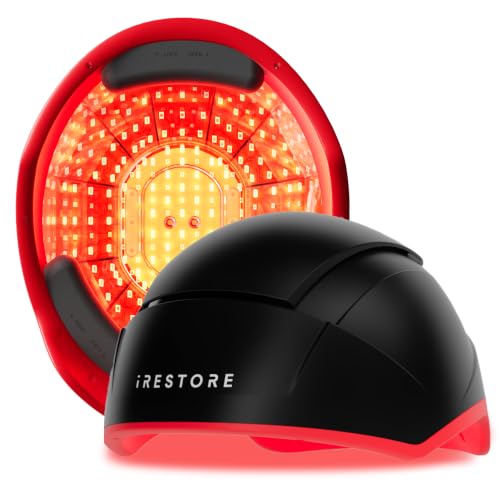
- Unmatched Hair Growth Technology: The iRESTORE Elite Laser Hair Growth Device offers advanced home treatment with 500 la…
- Proven Results: Experience the safest and most effective low-level red light therapy for hair growth with the iRESTORE E…
- Maximum Scalp Coverage: The iRESTORE Elite provides the best at home treatment with unmatched scalp coverage, reaching h…
- Technology: 300 laser diodes plus 200 LED-type diodes (the FDA summary calls them super luminescent diodes), 500 emitters in total.
- Wavelength: 625, 655 and 680 nm.
- Session: 12 minutes, daily. Total output is about 2,500 mW, per the FDA 510(k) record K222081, which also confirms clearance for the ID-510 iRestore Elite (October 13, 2022).
- Price: About $1,899 list on iRestore’s site, often discounted.
- Warranty and refund: 3-year warranty and a 12-month money-back guarantee, per iRestore. Read the refund terms, as reseller pages mention fees.
Advantages: Broad coverage, a short daily session, and a clear FDA record. Disadvantages: A bulkier, less discreet shape, and the “500 emitters” headline includes 200 LED-type diodes. Who should buy it: People who prefer a helmet and a 12-minute routine. Who should avoid it: Anyone who wants laser-only or wants to wear it out of the house. Value: Reasonable at promotional prices.
4. Kiierr 272 Premier Laser Cap
Kiierr’s flagship cap pairs a high laser count with longer, less frequent sessions.
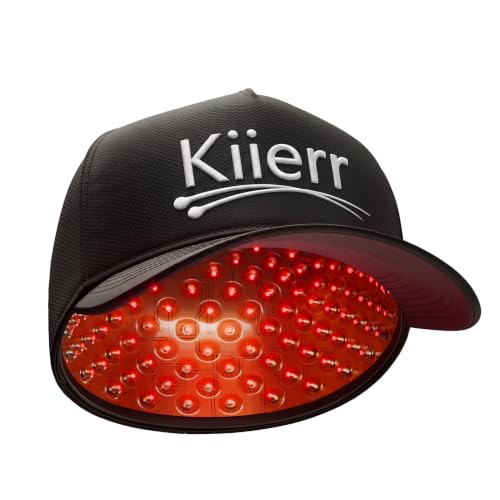
- 272 LASER DIODES: Designed to provide coverage across the upper scalp area.
- WEARABLE CAP DESIGN: Hands-free format for convenient use at home.
- 30-MINUTE SESSIONS: Review the included instructions before use.
- Technology: 272 laser diodes, 650 ± 5 nm, up to 5 mW each, no LEDs. An FDA-listed Class 3R laser system.
- Session: 30 minutes every other day, per most sources.
- FDA status: Cleared under K181878, covering the 272 Premier and 148 Pro.
- Price: Roughly $1,000–$1,800 depending on promotions.
- Warranty and refund: Third-party reviews cite a 2-year warranty and a 7-month money-back guarantee; confirm both with Kiierr before buying.
Advantages: Laser-only design, a clear clearance record, and frequent discounts. Disadvantages: A 30-minute session is a real time commitment, and warranty terms are less consistently documented. Who should buy it: People who don’t mind longer sessions and want laser density without flagship pricing. Who should avoid it: Anyone who wants a quick daily routine. Value: Good when discounted.
5. HairMax PowerFlex 272
HairMax is a long-established LLLT brand, and the PowerFlex 272 is its premium cap.

- VALIDATED BY CLINICAL TRIALS: Technology validated by 7 clinical studies, 14 international medical device licenses, and …
- REGROW FULLER DENSER HAIR: The Hairmax Laser Cap PowerFlex 272 applies clinically proven therapeutic laser light to the …
- FAST TREATMENT & COMFORT: Achieve clinically proven results with just 3 weekly treatments of 7 minutes. Featuring 272 me…
- Technology: 272 laser diodes in a flexible silicone liner, no LEDs, about 1,360 mW total (HairMax).
- Wavelength: 650 nm per HairMax’s cap specifications; verify on the listing.
- Session: 7 minutes, 3 days a week.
- FDA status: HairMax markets it as cleared. Record K180885 covers “HairMax Laser 272, 202 and 80,” so confirm how that name maps to the PowerFlex.
- Price and availability: Listed at $1,499 on HairMax’s site in our research, with other retailers higher. The page also showed the 272 as temporarily out of stock, so verify availability.
- Warranty and refund: 1-year warranty and a 6-month money-back guarantee, per HairMax; some reviews mention a handling fee.
Advantages: Three short sessions a week and a rechargeable cordless design. Disadvantages: Only a 1-year warranty at a premium price, and HairMax’s published study figures are manufacturer-reported. Who should buy it: Busy users who want few weekly sessions. Who should avoid it: Buyers who want a multi-year warranty. Value: Fair; you pay for brand history and routine convenience.
6. Theradome PRO LH80
Theradome takes the opposite approach: fewer lasers, fewer weekly sessions.

- Advanced Laser Technology for Hair Wellness: The Theradome Laser Hair Therapy Helmet uses medical-grade laser technology…
- Powerful & Targeted Light Therapy: Unlike other devices that mix lasers with LEDs, Theradome utilizes 40-80 premium lase…
- Full Scalp Coverage for Convenient Treatment: Theradome’s ergonomic helmet design ensures hands-free, full-scalp coverag…
- Technology: 80 laser diodes, no LEDs, cordless helmet.
- Wavelength: about 678–680 nm (Theradome markets it as 680 nm).
- Session: 20 minutes, twice weekly. Retailers say the clearance is for twice-weekly use.
- FDA status: Theradome states it is FDA-cleared, and a dealer cites a 2013 clearance. We did not verify the LH80’s 510(k) number; the Theradome LH40 appears as K180460 in the iRestore Elite record.
- Price: About $900–$1,000 at US retailers.
- Warranty: Retailer terms vary (1 to 2 years); we could not verify an official policy.
Advantages: Only two weekly sessions and a lower price. Disadvantages: The lowest diode count here, and one reviewer reported a frustrating warranty process. Who should buy it: People who value a low weekly time commitment. Who should avoid it: Buyers who want documented multi-year warranty terms. Value: Competitive if the schedule suits you.
7. illumiflow 272 Pro Laser Cap
The illumiflow is the value pick among 272-diode caps.
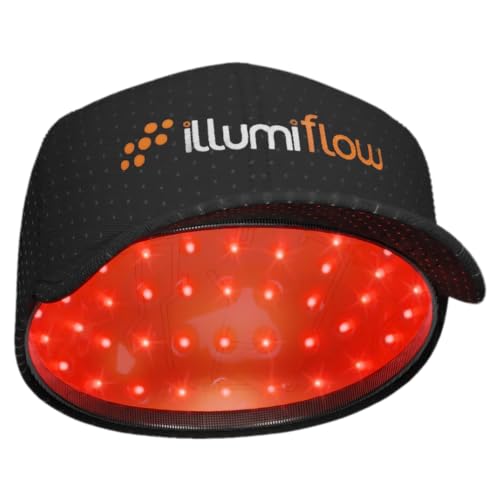
- Advanced Hair Growth Technology At Home: The illumiflow 272 Laser Cap is The Original OTC (Over-the-Counter) Solution to…
- Safe & Effective FDA Cleared Hair Growth System: If you are one of the millions of men and women struggling with embarra…
- Affordable, Pain-Free & Clinically Proven Tech: Get ahead of your genetic disposition to thinning hair, receding hairlin…
- Technology: 272 laser diodes at 650 nm, 5 mW each, no LEDs.
- Session: 30 minutes every other day.
- FDA status: FDA record K162071 (February 24, 2017) clears the “illumiflow Laser Cap,” which the summary compares to the Capillus 272 Pro. Confirm the Pro model matches. The summary also notes no safety interlock and no audible tones.
- Price: About $800–$1,000.
- Warranty and refund: Reviews and third-party reports cite a 5-year warranty and a money-back guarantee, but we could not verify the terms directly.
Advantages: The lowest price in the group and a long reported warranty. Disadvantages: A 30-minute session, and the company’s warranty terms need verification. Who should buy it: Value-focused buyers who accept longer sessions. Who should avoid it: People who want the most polished premium extras. Value: Strong on price.
What Makes a Premium Laser Hair Growth Cap Worth Buying?
Laser technology. Laser diodes emit coherent, narrow-band light, while LEDs emit broader light. Premium caps use diodes classified as Class 3R, with each diode at or under 5 mW in the FDA records we reviewed.
Diode placement and coverage. Even spacing matters more than the headline count. A cap that leaves gaps at the crown or hairline can underperform on paper. Full-scalp coverage varies between caps and helmets.
Wavelength. Most devices use red light near 650 nm. The Spectrum adds 808 nm near-infrared, and the iRestore Elite uses three red wavelengths. Whether extra wavelengths improve outcomes isn’t established by head-to-head evidence.
Power and energy. Total power multiplied by session time gives a rough nominal energy per session. By our arithmetic from manufacturer figures, 1,360 mW for 6 minutes is about 490 joules, while 1,360 mW for 30 minutes is about 2,450 joules. Those schedules aren’t equivalent, and no independent trial tells us which dose is better. Don’t assume more is better.
Consistency, comfort and battery. The best cap is the one you will actually wear. Caps with 6–7 minute sessions are easier to keep up than 30-minute sessions, while a lightweight, cordless design makes it easier to multitask.
Laser Caps vs LED Hair Growth Caps – Which Is Better?
Both technologies have supporting studies, and neither is clearly superior. A systematic review and meta-analysis of home-use LLLT devices pooled seven double-blind randomized trials and found a significant increase in hair density versus sham devices. Its subgroup analysis favored devices with laser diodes alone over laser-plus-LED combinations, but those are indirect comparisons across different trials, and the authors call for direct comparisons between energy sources.
LED research is growing too. A dual-wavelength LED cap trial randomized 160 participants to red-light, blue-light, or combined caps versus sham, with 10-minute daily sessions. No individual arm reached the primary endpoint, but the pooled active groups showed a statistically significant difference, about 28.5 more hairs per cm². Note that 91 participants were excluded from the per-protocol analysis, and that this was an LED cap rather than a laser device.
In practice, LEDs are cheaper to build, which is why inexpensive hats exist, but a low price tells you nothing about clearance or tested output. If you’re comparing options outside this list, our guide to the best red light therapy devices for hair growth covers other red light hair growth options.
FDA-Cleared vs FDA-Approved Laser Hair Growth Devices
These terms are not interchangeable, and laser hair caps are cleared, not approved.
- 510(k) clearance: The FDA finds a device substantially equivalent to a legally marketed predicate. These caps are Class II devices under 21 CFR 890.5500.
- FDA approval: A stricter premarket approval (PMA) process, generally for the highest-risk devices. None of the caps here went through it.
- Registration and listing: Manufacturers must register their establishment and list their devices. This is administrative and says nothing about whether a device works.
Clearance also doesn’t mean guaranteed regrowth. The K163170 summary shows the Capillus submission was aimed at expanding to over-the-counter sale, with a usability study of 55 adults, rather than proving efficacy. Even the title of the meta-analysis above uses the word “approved” loosely, which shows how often this gets muddled.
Because clearance applies to specific models, verify the exact name and number. Search the FDA’s 510(k) database for the K number, and be careful with similar names, since newer or renamed models may not match an older record.
Are Premium Laser Hair Growth Caps Worth the Investment?
That depends on your goals. At roughly $800 to $2,700, these caps cost far more than minoxidil. The AAD notes that only a few studies have looked at home laser devices, the results are promising, and not everyone saw regrowth. Using one is a long-term commitment, and you should expect to keep using it to maintain any benefit.
Premium buys convenience (6–7 minute sessions), cleaner laser-only designs, and longer warranties on some models. It doesn’t buy a guarantee. Compare the money-back window, warranty length, and refund fees before you buy. If you want to compare more devices, see our best laser hair growth devices in 2027 roundup.
How Long Does It Take to See Results?
Results vary, and the timelines below come from typical study durations, not guarantees.
- 3 months: Some users report reduced shedding or a healthier scalp. Visible regrowth is not expected for everyone, and clinical endpoints are often measured at 16–26 weeks.
- 6 months: This is the more realistic point to judge thickness or density, which is why trials commonly last about 26 weeks.
- 12 months: A fair test for most people. Use photos taken at the same angle and lighting to track progress, and talk to a dermatologist if nothing has changed.
The AAD says it can take months to see results from any treatment, and that no single treatment works for everyone.
How to Choose the Right Premium Laser Hair Growth Cap
- Men with pattern hair loss: Cleared indications cover Norwood-Hamilton IIa–V. Choose any 272-diode laser cap; consider pairing it with dermatologist-guided treatment.
- Women with thinning hair: Indications cover Ludwig-Savin I–II (and frontal patterns for some models). Confirm your pattern matches, and rule out other causes like thyroid or iron issues.
- Early-stage hair loss: Earlier treatment tends to work better, per the AAD. The Theradome or illumiflow keep costs lower.
- Short sessions: Capillus PRO (6 minutes daily), HairMax PowerFlex 272 (7 minutes, 3x weekly), or iRestore Elite (12 minutes daily).
- Portability: Capillus and HairMax caps are cordless and fit under a hat.
- Premium full-scalp coverage: Capillus Spectrum or iRestore Elite, keeping in mind they’re the most expensive options.
Common Mistakes to Avoid When Buying Laser Hair Growth Caps
- Assuming more diodes always means better results. Power, coverage and schedule matter.
- Counting LEDs as lasers. Check whether a count is lasers, LEDs, or both.
- Ignoring the exact model’s clearance. A brand’s clearance may not cover the cap you’re buying.
- Calling clearance “approval.” They are different.
- Skipping a diagnosis. Sudden, patchy or unexplained hair loss needs medical evaluation.
- Believing manufacturer marketing as independent research. Success rates on brand pages are not independent data.
- Overlooking warranty and refund fine print. Fees and registration windows apply.
- Buying from unverified sellers. Third-party listings may be used, refurbished or unauthorized.
- Quitting too soon. Judge results at 6 to 12 months.
Frequently Asked Questions
1. Are premium laser hair growth caps worth the money? They can be if you value a convenient, drug-free option and will use the cap consistently. They don’t guarantee regrowth.
2. Which laser hair growth cap is best overall? There’s no head-to-head evidence to name a clinical winner. Capillus PRO leads on session length, while illumiflow leads on price.
3. Do laser caps really help with thinning hair? A meta-analysis of randomized trials found increased hair density versus sham, but the AAD notes that not everyone sees regrowth and more research is needed.
4. How many laser diodes should a premium cap have? The 272–312 range is common in premium caps, but a cleared 80-diode helmet exists too. Check total power, coverage and clearance, not only the count.
5. Is a laser cap better than an LED hair growth helmet? Not proven. Both have supporting studies, and direct comparisons are limited.
6. Are FDA-cleared laser hair caps safe? Studies describe LLLT as generally safe and well tolerated, and clearance reflects a safety review. Protect your eyes, and check with your doctor if you’re pregnant, take photosensitizing medicines or have a scalp condition.
7. How often should you use a laser hair growth cap? Follow the manufacturer’s cleared protocol: daily for Capillus and iRestore Elite, three times weekly for HairMax, and every other day or twice weekly for others.
8. Can women use laser hair growth caps? Yes, within the cleared indications for female pattern hair loss, such as Ludwig-Savin I–II.
9. Can laser caps regrow hair on completely bald areas? Not reliably. Follicles that have been dormant for years may not respond, and cleared indications cover specific patterns.
10. How long should you use a laser cap before judging results? Plan on at least 6 months, and ideally 12, with consistent use and photos.
Final Verdict – Which Premium Laser Hair Growth Cap Should You Buy?
No cap here has been shown superior in head-to-head trials, so choose by routine, budget and verified clearance.
- Shortest daily routine: Capillus PRO (6 minutes daily).
- Fewest sessions per week: Theradome PRO LH80 (twice weekly) or HairMax PowerFlex 272 (three short sessions).
- Best value: illumiflow 272 Pro or Kiierr 272 Premier, if you accept 30-minute sessions.
- Helmet with documented FDA record: iRestore Elite.
- Most feature-rich, price no object: Capillus Spectrum.
Whichever you choose, confirm the model’s FDA 510(k) number, read the refund policy, and see a dermatologist if your hair loss is sudden or patchy. Ready to compare? Check the latest price on Amazon using the links above.
This article is for informational purposes only and does not replace medical advice. Prices, specifications and policies change; verify them before buying.