
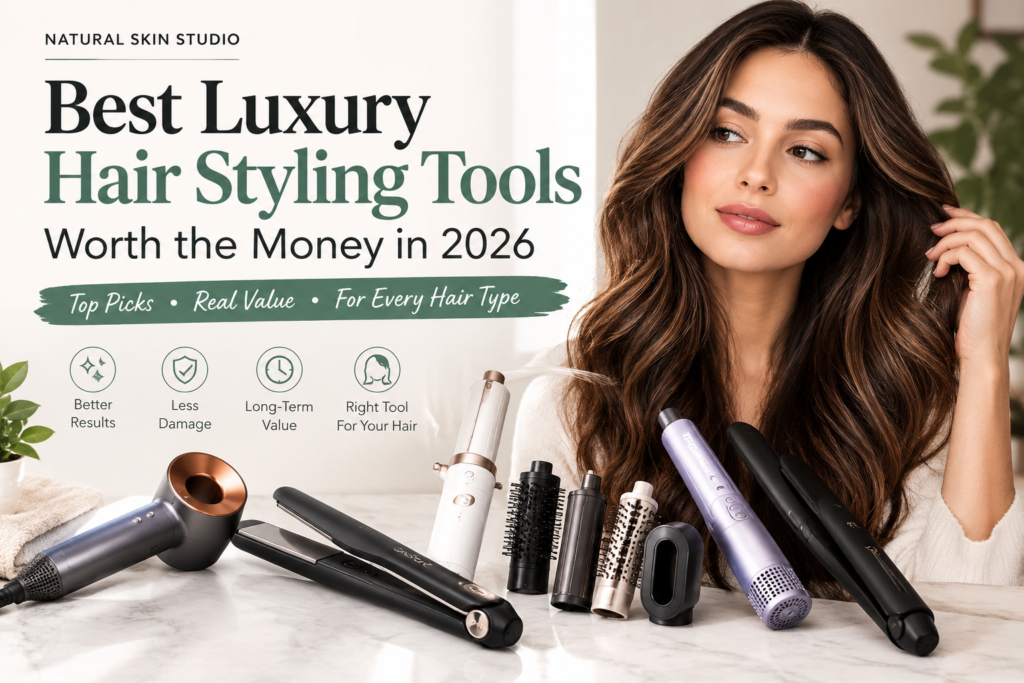
A $600 hair tool sounds unreasonable until you calculate how often you’ll actually use it — and compare what it replaces. If you style your hair five mornings a week, that same tool might work out to less than a dollar per use over a few years. If it sits in a drawer after the first month, it was never worth the money at any price.
That’s the real question behind every luxury hair tool purchase: does paying more actually buy you better styling, better hair protection, more convenience, or simply a more expensive logo?
This guide isn’t a ranked list built around one “best overall” pick. Luxury hair tools in 2026 — from the Dyson Airwrap Co-anda2x to the Shark Glam, T3 Aire 360, and ghd’s Chronos straighteners — are engineered for different hair types, routines, and priorities. A $750 multi-styler that’s perfect for someone with fine, wavy hair who styles daily could be a poor fit for someone with short, straight hair who washes twice a week. Our goal here is to help you match the right premium hair styling tool to your actual routine, not to talk you into the most expensive option on the shelf.
Below, we break down what “luxury” really means in hair tech, how to judge whether a specific tool is worth the money, and detailed looks at the multi-stylers, dryers, and straighteners most worth considering in 2026.
Note: Natural Skin Studio has not conducted independent lab testing on the products below. Specifications reflect manufacturer information current at the time of research, and testing observations are attributed to the outlets that conducted them (TechRadar, TODAY, Marie Claire, and others). Prices typically vary by retailer and promotions; figures below were checked during research and should be confirmed before purchase.
Quick Answer: Which Luxury Hair Tool Fits You?
| Tool | Best For | Approx. Price | Main Strength | Main Drawback | Worth It For? |
|---|---|---|---|---|---|
| Dyson Airwrap Co-anda2x | Best premium multi-styler | ~$750 | Strongest airflow, most refined attachment lineup, app personalization | High price, not dual voltage | Frequent stylers who want the most polished all-in-one system |
| Shark Glam | Best for textured & color-treated hair | ~$450 | Ceramic + air hybrid heat, developed with a textured-hair advisory board | Newer product with a shorter track record | Curly, coily, or color-treated hair that needs gentler, monitored heat |
| Shark FlexStyle (Build Your Own) | Best value among luxury multi-stylers | ~$200–$280 | Doubles as a full hair dryer, customizable attachment sets | Less refined airflow than Dyson | Budget-conscious buyers who still want multi-styler versatility |
| T3 Aire 360 (next-gen) | Best for fine to medium hair | ~$350 | Ceramic barrels for shine, dual voltage, gentler learning curve | Limited benefit for short hair | Fine or damage-prone hair that needs lower, steadier heat |
| Dyson Supersonic r | Best luxury hair dryer | ~$550–$570 | Precision “r” shaped attachments, intelligent heat sensing | Priciest dryer on this list | Anyone who dries and styles hair daily and wants salon-level finish |
| T3 AireLuxe | Best value premium dryer | ~$225 | Wide airflow, ion technology, lighter weight | Diffuser and comb sold separately | People who want a noticeably better dryer without multi-styler pricing |
| ghd Chronos | Best luxury straightener (all hair types) | ~$289–$299 | Motion-responsive heat, redesigned wishbone hinge for curling | Doesn’t add capabilities beyond straightening/curling | Anyone who wants one excellent styler for sleek styles and loose curls |
| ghd Chronos Max | Best for thick or long hair | ~$299–$329 | 43mm wide plates cover more hair per pass | Less nimble for short or fine hair | Thick, coarse, or long hair that takes a long time to straighten |
Prices reflect commonly listed U.S. retail pricing at the time of research and change with promotions, colorways, and included attachment sets.
What Actually Makes a Hair Tool “Luxury”?
A high price tag alone doesn’t make a styling tool luxury — plenty of expensive tools are simply expensive. What separates genuinely premium engineering from a marked-up price is a combination of factors working together:
- Motor technology and airflow. Higher-end multi-stylers and dryers use custom-built digital motors that spin faster and push more air, which is what allows styling with less direct heat.
- Temperature regulation. Rather than one fixed heat setting, better tools measure airflow or plate temperature many times per second and adjust automatically, which matters more for hair health than the maximum temperature number on the box.
- Ceramic and ionic technology. Ceramic surfaces distribute heat more evenly than bare metal, and ionic technology is marketed to reduce static and frizz — though the degree of real-world benefit varies by hair type.
- Attachment quality and fit. Cheap attachments wobble, overheat unevenly, or don’t lock in securely. Premium attachments are usually the biggest factory-cost difference you’re actually paying for.
- Ergonomics and weight. A tool you hold overhead for ten minutes needs to be light and well-balanced, or you’ll stop using it regardless of what it can do.
- Noise. Higher-performance motors aren’t automatically louder; some premium dryers are engineered to be quieter than budget models despite more airflow.
- Build quality and warranty. Premium brands typically back tools with two-to-five-year warranties and often sell replacement parts and attachments individually — a strong signal that the company expects the tool to last.
- Styling speed and versatility. A tool that replaces a dryer, curling iron, and volumizing brush can be worth more than its individual price suggests, if you’d otherwise buy all three separately.
Paying $500 instead of $150 does not automatically mean better results for your specific hair. It means you’re paying for more refined engineering that may or may not matter for how you actually style.
How We Judged “Worth the Money”
Rather than assigning arbitrary star ratings, we evaluated each tool against the same set of practical questions:
1. Performance — Does it actually achieve the intended style (curl hold, sleekness, volume) based on manufacturer claims and independent reviews?
2. Versatility — Can one device reasonably replace two or three separate tools you’d otherwise buy?
3. Hair compatibility — Who does this genuinely suit, based on barrel size, heat range, and attachment design?
4. Heat management — How actively does the tool monitor and regulate temperature, rather than simply blasting heat?
5. Ease of use — Is there a real learning curve, and how long does it typically take to get comfortable?
6. Build quality — Does the premium construction show up in material choice, attachment fit, and durability, or mostly in packaging?
7. Attachments — Are included attachments genuinely useful for common styles, or mostly redundant?
8. Long-term value — What’s the warranty length, and how easy is it to buy replacement parts years down the line?
9. Cost per use — This is the most useful number for deciding if a specific tool fits your life, and it’s worth walking through with real math.
The Cost-Per-Use Math
A $600 tool used four times a week for three years gets used roughly 624 times. $600 ÷ 624 works out to about $0.96 per use.
A $250 tool used only twice a month for two years gets used roughly 48 times. $250 ÷ 48 works out to about $5.21 per use.
That comparison doesn’t prove the $600 tool is “better” — it simply shows that frequency of use matters more than sticker price when you’re deciding whether a premium tool makes financial sense. A cheaper tool used constantly can end up costing less per use than an expensive one that mostly sits in a drawer.
Premium Multi-Stylers
Multi-stylers are the most talked-about category in luxury hair tools, largely thanks to the Dyson Airwrap’s rise to a genuine cultural phenomenon. They use fast-moving air (and, increasingly, ceramic heat) to dry, curl, smooth, or add volume with one handheld unit and interchangeable attachments.
Dyson Airwrap Co-anda2x
Best for: Frequent stylers with medium-to-long hair who want the most refined all-in-one system currently on the market.
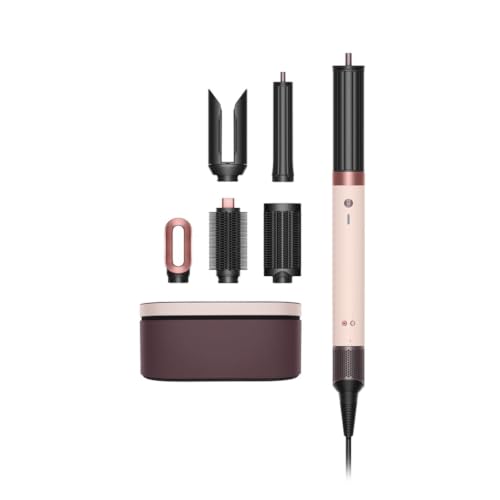
- The next-level multi-styler for supercharged styling. Better curling. Faster drying. Straighter styles.¹ No heat damage.
- Our most powerful Airwrap multi-styler for supercharged styling. 30% more powerful.¹ 2x the air pressure powered by the …
- 6-in-1 versatility. Dry, curl, wave, straighten, smooth and volumize.
What it does: A six-in-one dryer and multi-styler that uses the Coanda effect — a fast jet of air that draws hair around a barrel — to curl, wave, smooth, or volumize without direct high heat contact on most attachments.
Key features:
- New Conical Co-anda2x curling barrel plus a longer 1.6-inch curling barrel for looser waves
- New Air straightener 2x attachment for wet-to-dry straightening
- Large round volumizing brush 2x
- Bluetooth connectivity with the MyDyson app for personalized styling sequences
- i.d. curl sequence that senses movement and automatically adjusts heat, airflow, and timing
What makes it premium: According to Dyson, the Co-anda2x runs on the brand’s Gen 2 motor with roughly double the air pressure of earlier Airwrap generations, and RFID-equipped “intelligent” attachments communicate with the motor unit to remember preferred settings. Dyson describes the update as engineered to deliver stronger performance without heat damage, using the Gen 2 motor and its increased air pressure to shape, smooth, and define hair with more precision.
What you actually get for the price: You’re paying for six attachments engineered to work with one motor system, a warranty and parts program from an established brand, and — for many users — the shortest learning curve among high-airflow multi-stylers, since the tool does more of the “wrapping” work automatically. Independent coverage from TechRadar notes the Co-anda2x adds a more powerful motor, attachment memory, and a wet-to-dry straightening attachment, in a body that’s lighter and more compact than the previous Airwrap i.d.
Pros:
- Strongest airflow and most attachment variety in the multi-styler category
- Attachment memory reduces repeated fiddling with settings
- Wet-to-dry straightening attachment adds real versatility
- Established parts and repair ecosystem
Cons:
- The highest price point in this guide at roughly $750
- Not dual voltage, so it isn’t ideal for frequent international travel
- Still requires practice to master certain attachments, particularly for beginners
- App features add convenience but aren’t essential to core function
Who should buy it: Someone who styles hair most days, has medium-to-long hair, and wants to consolidate a dryer, curling iron, and smoothing brush into one system they’ll use for years.
Who should skip it: Anyone who mostly wears hair short, air-dries regularly, or travels internationally often without dual-voltage adapters they trust.
Is it worth the money? For frequent stylers who’ll genuinely use most of the attachments, the cost-per-use math tends to work out favorably within two to three years. For occasional stylists, the up-front cost is hard to justify next to a $300 alternative that covers similar basic functions.
Shark Glam
Best for: Curly, coily, and color-treated hair that benefits from more careful heat monitoring.
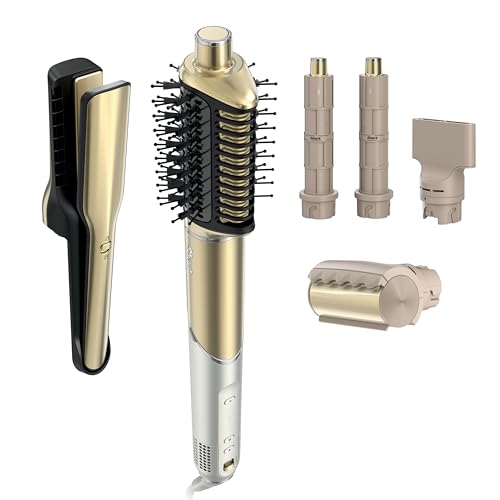
- Shark Silki Hot Tool + Air Straightener: Heat-controlled ceramic + high-speed airflow provide the ultimate silky-smooth …
- Shark Glossi Hot Tool + Air Glosser: Heat-controlled ceramic + high-speed airflow provide an ultra-fast dry time for max…
- No Hot Tool Damage: Heat-controlled ceramic plates + precise, high-speed airflow deliver sleek, smooth results with ever…
What it does: A five-attachment ceramic-and-air hybrid system that combines Shark’s Coanda-style airflow with heated ceramic surfaces for a more direct, in-one-pass finish on some attachments.
Key features:
- Glossi ceramic brush and Silki air straightener included in both hair-type versions
- Separate configurations for straight/wavy versus curly/coily hair, the latter including a curl-defining diffuser and wide-tooth comb
- HeatSense technology that Shark states monitors airflow temperature roughly 1,000 times per second
What makes it premium: Shark developed the Glam with input from a newly formed Textured Hair Advisory Board, and the brand’s HeatSense technology is designed to keep airflow below 302°F to reduce potential damage on textured or color-treated hair. The combination of ceramic heat with air-based styling is a genuine point of difference from purely air-based competitors.
What you actually get for the price: At roughly $450, you’re getting five attachments split across two hair-type-specific kits, ceramic heat elements most competitors in this price range don’t include, and a company that has specifically designed a version for curl patterns often underserved by earlier multi-stylers.
Pros:
- Meaningfully lower price than the Dyson Co-anda2x
- Curly/coily-specific attachment set is a genuine market gap it fills
- Ceramic elements can create a more finished look on wavy-to-curly hair in fewer passes
- Frizz-control claims backed by a stated real-time heat-monitoring system
Cons:
- Newer to the market than Dyson or T3, so long-term reliability data is thinner
- Choosing between the two attachment sets means committing to one hair-type profile upfront
- Some reviewers note the ceramic attachments have a different feel and learning curve than pure air styling
Who should buy it: Someone with curly, coily, or color-treated hair who wants a mid-luxury price point and appreciates the hybrid heat approach.
Who should skip it: Straight or fine-haired users who don’t need the ceramic-heat attachments and would rather pay less for a simpler air-only system.
Is it worth the money? For its target hair types, yes — the hybrid ceramic-and-air approach addresses a real limitation of pure airflow tools. For hair types the Glam wasn’t specifically designed around, competitors may deliver similar results for less.
Shark FlexStyle (Build Your Own)
Best for: Buyers who want multi-styler versatility without spending luxury-tier money.

- MULTI-STYLING HAIR DRYER TOOL: Rotate the powerful hair dryer to transform into a versatile multi styler for drying, sty…
- CURL, VOLUMIZE, SMOOTH & DRY: Attach stylers to the wand to curl, volumize, smooth, and dry. Create multiple styles with…
- NO HEAT DAMAGE: Fast drying with low heat, measuring and regulating temperatures 1000x per second to ensure consistent a…
What it does: A dryer-and-multi-styler hybrid that converts between a standalone hair dryer and an attachment-based curling and smoothing system.
Key features:
- “Build Your Own” configuration lets buyers choose five attachments for one price
- Auto-Wrap Curlers use Coanda-style airflow similar to premium competitors
- Doubles as a full-power hair dryer on its own, without any attachments
What makes it premium relative to its price: The FlexStyle’s rotating barrel design converts into a high-powered hair dryer, meaning buyers get a full dryer plus curling and smoothing attachments in one purchase, at a lower cost per attachment than some pricier multi-stylers.
What you actually get for the price: Roughly $200–$280 (depending on the attachment bundle and promotions) buys a legitimate air-based multi-styler plus a genuinely usable stand-alone dryer — a combination that saves you from buying a separate dryer altogether.
Pros:
- Meaningfully cheaper than Dyson or Shark Glam
- Functions as a complete standalone hair dryer, not just a styling tool
- Customizable attachment sets so you only pay for what you’ll use
- Frequently discounted directly through SharkNinja
Cons:
- Airflow and wrap consistency are generally considered a step below Dyson’s in independent comparisons
- Attachment build quality feels noticeably less premium than pricier competitors
- Fewer intelligent/automatic features than the Co-anda2x or Glam
Who should buy it: Someone curious about the multi-styler category who wants real versatility without spending $450-plus, or a second household member who wants their own system.
Who should skip it: Anyone who has tried an air-based multi-styler before and found the learning curve frustrating — this won’t solve that problem, and higher-end options handle the wrapping motion more automatically.
Is it worth the money? For the price, yes. It’s the category’s clearest “worth it” pick for anyone unsure if multi-stylers fit their routine at all before committing to a $500-plus purchase.
T3 Aire 360 (Next-Gen)
Best for: Fine, damage-prone, or wavy hair that benefits from steadier ceramic heat rather than higher airflow speed alone.
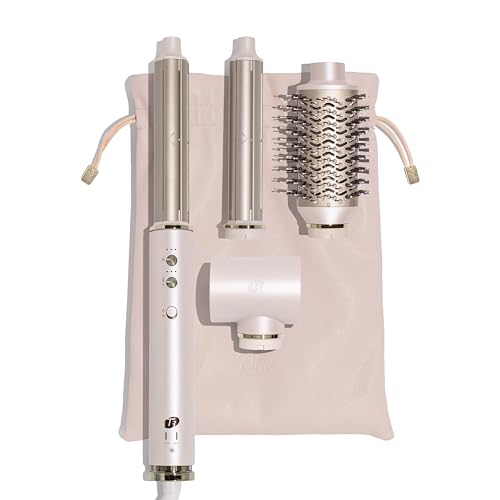
- 4-IN-1 BLOWOUT SYSTEM FOR TRAVEL: T3 AIRE 360 replaces your hair dryer, blowout brush, round brush, and curling iron. Th…
- CERAGLOSS CERAMIC FOR GLOSSY BLOWOUTS: CeraGloss ceramic distributes heat evenly to prevent hot spots, smooth the cuticl…
- AIRE 360 AIR-CURLING TECHNOLOGY: Channels powerful airflow to wrap hair and form soft, bouncy blowout curls with less he…
What it does: A ceramic air styler that dries, smooths, and curls using a combination of airflow and ceramic-coated barrels rather than pure air-based wrapping.
Key features:
- CeraGloss ceramic curling barrels
- SoftAire concentrator for fast root-drying
- Oval smoothing brush with SmoothGrip bristles
- Dual voltage on the next-generation US model, a notable travel advantage
What makes it premium: T3 markets the Aire 360 as the first ceramic air styler on the market, positioning the ceramic barrels as gentler and more consistent than bare-metal alternatives. TechRadar’s testing found the tool retains a learning curve across its attachments and offers limited appeal for short hair, but rates it among the better multi-stylers available at its price point once a user finds their rhythm.
What you actually get for the price: At roughly $350, you’re paying less than half the Dyson Co-anda2x price for a similar core function — drying, curling, and smoothing in one tool — with dual voltage thrown in on the current US model, something Dyson’s flagship still lacks.
Pros:
- Dual voltage on the next-gen model is a genuine travel advantage over Dyson
- Ceramic barrels are gentler and more forgiving for damage-prone hair
- Meaningfully lower price than Dyson or Shark Glam
- Well-reviewed shine and hold results for wavy-to-curly hair types
Cons:
- Still has a real learning curve, particularly with the oval brush attachment
- Short hair sees limited benefit from most attachments
- Fewer “smart” features (no app connectivity, less automation) than Dyson’s flagship
Who should buy it: Fine-to-medium hair types, frequent travelers who need dual voltage, and anyone who wants Airwrap-style results without the Airwrap-level price.
Who should skip it: Very short hair, or anyone specifically drawn to Dyson’s app-based personalization and automatic wrap-sensing features.
Is it worth the money? For its price bracket, yes. Among mid-tier luxury multi-stylers, it consistently comes up as the best-value option in independent comparisons for people who don’t need the absolute top-tier airflow of the Dyson flagship.
Premium Hair Dryers
Not everyone needs a multi-styler. If your routine is mostly “dry hair, then style separately with a straightener or curling iron,” a dedicated luxury dryer may make more sense than a $700 multi-attachment system you’ll only partially use.
Dyson Supersonic r
Best for: Daily stylers who want the most precise, salon-caliber drying and finishing available at the consumer level.

- Smaller. Lighter. Fastest drying¹. With no heat damage. The precision hair dryer for superior styling.
- New ergonomic format allows you to dry and style where it’s normally hard to reach – for control and comfort.
- Dyson’s fastest drying for smoother hair with reduced frizz, and better alignment¹
What it does: A standalone hair dryer built around a new curved “r” shaped body, designed for more precise attachment control than the original Supersonic.
Key features:
- Pro concentrator, powerful air attachment, wide-tooth comb, and diffuser attachments
- Intelligent heat control that Dyson states measures airflow temperature over 20 times a second
- RFID-equipped attachments that recall previous settings automatically
What makes it premium: The Supersonic r uses Dyson’s Hyperdymium motor spinning up to 110,000 rpm, and Dyson states the format is engineered to focus heat and airflow evenly for fast, precise drying with a salon-style finish. The curved body is specifically intended to make hard-to-reach sections easier to style without repositioning your arm as much.
What you actually get for the price: At roughly $550 to $570, this is priced above Dyson’s original Supersonic and above most competitor dryers, positioning it as the brand’s precision-styling flagship rather than a simple drying tool.
Pros:
- Most refined attachment ergonomics in the luxury dryer category
- Intelligent temperature monitoring reduces guesswork
- Attachment memory speeds up repeat styling sessions
- Notably lightweight for its power output, according to manufacturer specifications
Cons:
- The most expensive dedicated dryer on this list
- Overkill for anyone with a simple, low-maintenance hair routine
- Attachments purchased individually can add to the overall cost
Who should buy it: Someone with an established styling routine (round brush blowouts, diffusing curls) who dries and styles hair most days and wants dryer-only precision without multi-styler bulk.
Who should skip it: Anyone who mostly rough-dries and doesn’t do a detailed styling routine afterward — a simpler, less expensive dryer will dry hair just as effectively.
Is it worth the money? For frequent, detail-oriented stylers, yes. For anyone whose routine is “dry and go,” this is more precision than you need.
T3 AireLuxe
Best for: Anyone who wants a noticeably better dryer than a drugstore model without paying multi-styler prices.

- PROFESSIONAL BLOW DRYER FOR FAST DRYING: T3 AireLuxe’s digitally controlled heat and ion-rich airflow deliver fast dryin…
- ION GENERATOR FOR SMOOTHER, FRIZZ-FREE STYLING: AireLuxe produces 10 million negative ions per second to neutralize stat…
- 5 HEAT & 3 SPEED SETTINGS PLUS COOL SHOT: Choose from 5 heat and 3 speed settings for any hair type, gentle for fine or …
What it does: A standalone professional-style hair dryer built around wide, ion-rich airflow rather than direct high heat.
Key features:
- T3’s RapidAire IQ technology for wide, fast airflow
- Ion generator marketed to reduce frizz and add shine
- 15 combined heat and speed settings
- Two-year warranty
What makes it premium: T3 states the AireLuxe uses a custom-engineered fan producing airflow 128% wider than standard, cutting dry time while helping hair retain more of its natural moisture, alongside an ion generator delivering roughly 10 million negative ions per second.
What you actually get for the price: At around $225, this sits well below true flagship dryers while still offering wide airflow, digital heat control, and ion technology — a meaningful step up from budget dryers without Dyson-level pricing.
Pros:
- Noticeably lighter and better balanced than many budget dryers, per manufacturer specs
- Wide airflow speeds up drying on medium-to-long hair
- More affordable entry point into the premium dryer category
- Two-year warranty backing the purchase
Cons:
- Diffuser and smoothing comb attachments sold separately
- TechRadar’s review noted the maximum temperature could run hotter for those who want it
- Some customer reviews cite inconsistent long-term durability and warranty service experiences, so it’s worth registering your warranty and keeping proof of purchase
Who should buy it: Someone upgrading from a basic dryer who wants genuinely faster drying and better ergonomics without spending $500-plus.
Who should skip it: Buyers who specifically want an all-in-one styling system rather than a dedicated dryer, or who plan to rely heavily on the diffuser attachment sold separately.
Is it worth the money? For daily use, yes — this is one of the stronger cost-per-use arguments in this guide given its comparatively low entry price.
Luxury Straighteners
A dedicated straightener still makes more sense than a $500-plus multi-styler if your primary style is sleek and straight, if you rarely curl or wave your hair, or if you want the fastest possible single-pass finish on thick or long hair.
ghd Chronos
Best for: Anyone who wants one excellent tool for both sleek, straight styles and loose curls or waves.

- 3x faster styling results: Our patented, smart HD motion-responsive technology adapts to your movements for ultra-fast o…
- Long-lasting shine: Achieve up to 85% more shine, 2x less frizz, and high-definition styles that last for 24 hours¹
- No extreme heat damage: Maintains the optimal 365ºF temperature with 2x more heat monitoring responsiveness for safe, co…
What it does: GHD’s flagship wired straightener, built around motion-responsive heat technology and a redesigned hinge that makes curling with a flat iron noticeably easier.
Key features:
- 26.8mm ceramic-coated plates
- Redesigned wishbone hinge, curved at the ends specifically to make curling easier
- Motion-responsive heat technology that adjusts based on hair thickness passing through the plates
What makes it premium: The Chronos sits at the top of GHD’s wired straightener range, with a smaller, more compact body than the previous Platinum+ and a redesigned, more curved hinge that makes curling noticeably easier.
What you actually get for the price: At roughly $289 to $299, you’re paying for GHD’s most advanced heat-sensing technology in a wired straightener, a design specifically reworked for dual straightening-and-curling use, and the brand’s established warranty and parts support.
Pros:
- Genuinely dual-purpose: straightens and curls well with the same tool
- Motion-responsive heat adjusts to hair thickness in real time, according to GHD
- More compact and ergonomic than GHD’s older flagship models
- Reasonably fast heat-up time
Cons:
- Doesn’t offer meaningfully more capability than GHD’s less expensive Platinum+ for straightening alone
- 26.8mm plates take longer on very thick or long hair than the wider Chronos Max
- Wired design limits some portability compared to cordless competitors
Who should buy it: Someone with mixed styling needs — straight some days, loose curls or waves other days — who wants one tool that handles both well.
Who should skip it: Anyone who only ever straightens and never curls; GHD’s less expensive Platinum+ or Gold lines cover that need for considerably less.
Is it worth the money? For versatility between two style types, yes. For straightening alone, it’s a smaller upgrade than the price difference from cheaper GHD models suggests.
ghd Chronos Max
Best for: Thick, coarse, or long hair that takes noticeably longer to straighten with standard-width plates.

- Wider plates for faster styling: 2” ceramic plates are 70% larger* to straighten long, thick, or curly hair in half the …
- Shine and smoothness in one pass: Delivers up to 80% more shine and 2x less frizz with high-gloss plates and dual-zone h…
- Optimum temperature, no guessing: Pre-set to the scientifically proven 365ºF for styling without extreme heat damage
What it does: A wide-plate version of the Chronos, built specifically to cover more hair per pass.
Key features:
- 43mm ceramic-coated plates — roughly 85% wider than the standard Chronos
- Same motion-responsive heat technology as the standard Chronos, fixed around 185°C
- Wishbone hinge shared with the standard Chronos
What makes it premium: The Chronos Max has plates 85% wider than the standard Chronos, uses the same HD motion-responsive technology fixed at 185°C, and is positioned by GHD as up to three times faster styling than the Platinum+.
What you actually get for the price: At roughly $299 to $329, the price premium over the standard Chronos buys meaningfully wider plates — the single biggest factor in styling speed for thick or long hair — rather than a different heat technology.
Pros:
- Covers noticeably more hair per pass than standard-width straighteners
- Can reduce the number of repeated passes needed, which may mean less cumulative heat exposure
- Shares the same refined hinge and heat-sensing technology as the standard Chronos
- Well-suited to long, thick, or coarse hair textures specifically
Cons:
- Wide plates are less maneuverable for short hair, fine hair, or detailed curling work
- Priced above the standard Chronos for a single structural change
- Fixed heat setting means less flexibility for those who prefer lower temperatures
Who should buy it: Long, thick, or coarse hair where standard-width plates mean repeated passes and longer total styling time.
Who should skip it: Short or fine hair, or anyone who values single-tool curling versatility over raw straightening speed — the standard Chronos handles that better.
Is it worth the money? For its specific target hair type, yes — wider plates solve a real, specific problem. For hair types that don’t need faster coverage, it’s an unnecessary upgrade over the standard Chronos.
Dyson vs. Shark vs. T3: Which Premium Multi-Styler Makes Sense?
There’s no single winner here — the right choice depends on what you’re optimizing for.
- Maximum versatility and refinement: The Dyson Airwrap Co-anda2x remains the most complete system, with the widest attachment range and the most automated wrapping technology.
- Best price-to-performance: The T3 Aire 360 next-gen consistently comes up in independent comparisons as delivering close to Dyson-level results for meaningfully less money.
- Textured or color-treated hair: The Shark Glam’s ceramic-and-air hybrid approach and dedicated curly/coily attachment set address a gap the pure-airflow competitors don’t specifically target.
- Frequent international travel: The T3 Aire 360 next-gen’s dual voltage is a genuine advantage over the current Dyson flagship, which isn’t dual voltage.
- Thick hair that needs strong airflow to dry quickly: The Dyson’s higher air pressure specs give it an edge for faster root-drying on dense or long hair.
- Fine or fragile hair that needs gentler, steadier heat: T3’s ceramic barrels and Shark Glam’s temperature-monitoring technology are both built around more conservative heat management than pure high-speed airflow alone.
- Tightest budget among the three: Shark’s FlexStyle “Build Your Own” configuration undercuts all three flagships significantly while still delivering genuine multi-styler function.
If you’re choosing based on hype alone, you’ll likely end up with the Dyson. If you’re choosing based on your actual hair type, frequency of travel, and budget, one of the alternatives may genuinely serve you better.
Who Should Not Buy Luxury Hair Tools?
This is worth being honest about, because a expensive tool that goes unused is a worse purchase than a cheap one that gets daily use.
Luxury hair tools are probably not worth the money if you:
- Style your hair only occasionally — a few times a month rather than several times a week
- Usually air-dry and rarely use heat styling at all
- Wear one simple, low-maintenance hairstyle regardless of the tool available
- Are working with a tight budget and would need to finance the purchase
- Don’t need multiple attachments or styling options — you do one thing to your hair, consistently
- Already own a high-quality dryer or straightener that still works well
- Are unlikely to invest the time to learn a multi-styler’s attachments and technique
- Expect a tool to automatically produce salon results without any technique or practice on your part
None of this is a judgment on the tools themselves — it’s a matter of fit. A $750 multi-styler used twice a month for two years works out to roughly $15 per use. The same tool used four times a week works out to under a dollar. The tool doesn’t change; your routine determines whether the math makes sense.
Which Tool Is Best for Your Hair Type?
| Hair Type | What to Prioritize | Tool Type to Consider | What to Avoid |
|---|---|---|---|
| Fine hair | Lower, steadier heat; lighter tool weight | Ceramic multi-stylers (T3 Aire 360), lower-heat dryers | Tools with only high, fixed heat settings |
| Thick hair | Strong airflow or wide plates | High-airflow multi-stylers (Dyson), wide-plate straighteners (ghd Chronos Max) | Narrow-plate straighteners requiring many passes |
| Coarse hair | Higher heat capacity, wider plates | ghd Chronos Max, high-power dryers | Low-wattage or narrow-attachment tools |
| Curly hair | Diffusers, curl-specific attachments | Shark Glam curly/coily set, diffuser-equipped dryers | Flat, wide brush attachments with no curl definition |
| Coily hair | Gentle, monitored heat; wide-tooth comb attachments | Shark Glam curly/coily set, Dyson wide-tooth comb attachment | High, unmonitored heat settings |
| Wavy hair | Barrel-based curling attachments, moderate heat | T3 Aire 360, ghd Chronos (curling function) | Overly aggressive high-heat straightening-only tools |
| Straight hair | Smoothing brushes, consistent plate heat | Dedicated straighteners, smoothing brush attachments | Multi-stylers bought mainly for curling features you won’t use |
| Long hair | Wide coverage, strong airflow for drying time | ghd Chronos Max, high-airflow dryers | Small barrels or narrow plates that multiply styling time |
| Short hair | Compact attachments, simple single-purpose tools | Standard dryers, compact straighteners | Multi-stylers with attachments sized for long hair |
| Color-treated hair | Heat monitoring, ceramic surfaces | Shark Glam, ceramic-barrel multi-stylers | Unmonitored high heat with repeated passes |
| Dry/damaged hair | Lower heat, fewer repeated passes | Ceramic or air-based tools with heat sensing | High, fixed heat settings and frequent styling |
This table reflects general styling considerations, not medical or dermatological guidance. If you have ongoing hair or scalp concerns, a dermatologist or trichologist can offer guidance specific to your situation.
Do Expensive Hair Tools Actually Cause Less Damage?
The honest answer is: it depends on what “less damage” is being compared against, and no styling tool is completely damage-free.
Several distinct claims get bundled together in marketing, and it’s worth separating them:
- Lower heat exposure — Air-based multi-stylers generally use less direct, sustained heat than a traditional flat iron or curling iron held at a fixed high temperature, which can mean less cumulative thermal stress over repeated styling sessions.
- Temperature regulation — Tools that actively measure and adjust heat many times per second (as several products in this guide claim to do) are designed to avoid the temperature spikes that can occur with basic, unregulated heating elements.
- Faster drying — Reducing the total time hair spends near a heat source can reduce cumulative exposure, independent of the peak temperature reached.
- Ceramic surfaces — Ceramic coatings distribute heat more evenly than bare metal, which can reduce localized hot spots, though this doesn’t eliminate heat’s effect on hair structure.
- Actual hair damage — This depends on far more than the tool alone: hair porosity, existing chemical treatments, styling frequency, technique, and use of heat protectant all play a role.
Manufacturers frequently state that their tools cause “no heat damage” under specific test conditions — for example, Shark’s Glam materials describe testing in wet-mode conditions. These are manufacturer claims tied to specific methodologies, not universal guarantees. Heat and repeated styling can still affect hair over time regardless of which tool you use, and following the manufacturer’s recommended settings and heat-protectant guidance matters as much as which tool you choose.
Luxury vs. Value: When Should You Spend $500-Plus?
Spend more if:
- You style your hair four to seven days a week
- You want one tool to replace multiple separate devices you currently own
- Styling speed genuinely matters to your morning routine
- You frequently create blowouts or curls rather than a single simple style
- Ergonomics and comfortable extended use matter to you specifically
- You want more advanced, automatic temperature and airflow control
- You expect to use the tool consistently for several years, making the cost-per-use math favorable
Save your money if:
- You style your hair only occasionally
- Your routine is limited to straightening, without curling or volumizing needs
- Your routine is limited to drying, without a detailed styling step afterward
- You already own a good-quality tool that still performs well
- You don’t anticipate using multiple attachments regularly
How to Choose a Luxury Hair Styling Tool
- Identify your main hairstyle. Straight, wavy, curly, or a mix — this narrows the category before you compare specific products.
- Identify your hair type. Fine, thick, coarse, color-treated, or damage-prone hair each benefit from different heat and airflow profiles.
- Decide whether you need one tool or several. A multi-styler makes sense if you currently use two or three separate tools; a dedicated dryer or straightener makes sense if your routine is simpler.
- Check temperature control. Look for tools with active heat sensing rather than a single fixed setting, particularly for fine or damaged hair.
- Check attachments. Confirm the included attachments match your actual styles, not just the ones pictured in marketing.
- Consider weight and ergonomics. A tool that’s uncomfortable to hold for ten minutes won’t get used regardless of its specs.
- Check the warranty. Two years is common among premium brands; some go longer.
- Check replacement attachment availability. Tools with individually purchasable replacement parts tend to last longer in practical terms.
- Check voltage and travel compatibility. Not every luxury tool is dual voltage — confirm before assuming you can bring it abroad.
- Calculate your approximate cost per use. Estimate how many times you’ll realistically use the tool over two to three years and divide the price accordingly.
- Compare current price, not launch price. Luxury hair tools are frequently discounted from their original list price through retailers and promotional periods.
- Only pay extra for features you’ll actually use. App connectivity, wide plates, or extra attachments are only worth their added cost if they solve a problem you actually have.
Frequently Asked Questions
Are luxury hair styling tools worth the money? For frequent users whose hair type matches the tool’s design, often yes — the cost-per-use tends to work out favorably over a few years. For occasional stylers or simple routines, a less expensive tool frequently performs similarly for the tasks they actually need.
Is the Dyson Airwrap worth it in 2026? The current Co-anda2x offers the strongest airflow and most refined attachment system in the multi-styler category, according to manufacturer specifications and independent coverage. It’s most worth its roughly $750 price for frequent stylers with medium-to-long hair; occasional users or those on tighter budgets may find similar core function in the T3 Aire 360 or Shark FlexStyle for considerably less.
Is Shark FlexStyle better value than the Dyson Airwrap? For price-to-function, yes — the FlexStyle costs significantly less while still combining dryer and multi-styler functions. The trade-off is generally considered to be somewhat less refined airflow and attachment build quality compared to Dyson’s flagship.
Is the T3 Aire 360 worth buying? For fine-to-medium hair, damage-prone hair, or frequent travelers who need dual voltage, the next-gen Aire 360 is frequently cited as the best value among premium multi-stylers, offering much of the core function of pricier competitors for around half the price.
What is the best luxury hair styler for thick hair? Among multi-stylers, the Dyson Airwrap Co-anda2x’s stronger airflow tends to perform well on thick hair. Among straighteners, the ghd Chronos Max’s wide 43mm plates are specifically designed to cover more thick hair per pass.
What is the best premium styling tool for fine hair? The T3 Aire 360’s ceramic barrels and steadier heat management are generally better suited to fine or fragile hair than tools relying primarily on high airflow speed or fixed high heat.
Are expensive hair tools less damaging? They can reduce certain contributors to damage — like unregulated heat spikes or excessive styling time — but no tool eliminates the effects of heat and repeated styling entirely. Technique, hair condition, and heat-protectant use matter as much as the tool itself.
Should I buy a multi-styler or separate tools? If you currently use two or three separate devices (dryer, curling iron, volumizing brush) and want to consolidate, a multi-styler often makes sense. If your routine is narrowly focused on one function — just straightening, or just drying — a dedicated tool is usually the better value.
How long should an expensive hair styling tool last? Most premium brands back their tools with two-year warranties, and many tools remain functional well beyond that with proper care. Replacement attachments and parts availability is a good indicator of how long a brand expects a given tool to remain in service.
What should I look for before buying a luxury hair tool? Match the tool to your actual hair type and styling frequency first, then compare temperature regulation, attachment quality, warranty length, and current price (not launch price) before deciding.
Final Thoughts: Are Luxury Hair Styling Tools Worth It?
There isn’t one universal winner in this category, and that’s the point. Different tools solve different problems:
- Best for multi-styling versatility: Dyson Airwrap Co-anda2x
- Best for premium drying alone: Dyson Supersonic r
- Best for straightening and light curling: ghd Chronos
- Best value premium option: T3 Aire 360 (next-gen) or T3 AireLuxe
- Best for frequent daily styling: Dyson Airwrap Co-anda2x or ghd Chronos Max
- Best for specific hair types: Shark Glam for textured and color-treated hair, ghd Chronos Max for thick or long hair
The most expensive tool on the shelf is not automatically the best purchase — even within the luxury category, price differences often reflect different design priorities rather than a straightforward upgrade path. The right luxury hair styling tool is the one whose features actually match your styling routine, hair type, and how often you’ll realistically use it. If you style daily and the math works out to under a dollar per use, a premium tool can genuinely pay for itself in time saved and results. If your routine is simpler than that, it’s worth being honest about whether you’re buying a tool or buying the idea of one.
Related reading: see our guide to Best Luxury Hair Dryers in 2026: Dyson, Shark, T3 & More for a deeper dive into dedicated dryers, our roundup of Top 10 Hair Growth Oils That Actually Work Fast (2026 Guide) if you’re building out a broader hair-health routine, and browse the full Natural Skin Studio Beauty Tools category for more product guides.