
Natural Skin Studio may earn a commission if you purchase through links in this article. This does not affect our editorial opinions or recommendations.
Every so often a styling tool promises to make two steps into one, and the promise falls apart the moment it meets real hair. The Dyson Airstrait makes a bolder version of that claim: no hot plates, no separate blow-dry, just wet hair going in and straightened hair coming out. That’s a big claim for a tool that costs around $499.99.
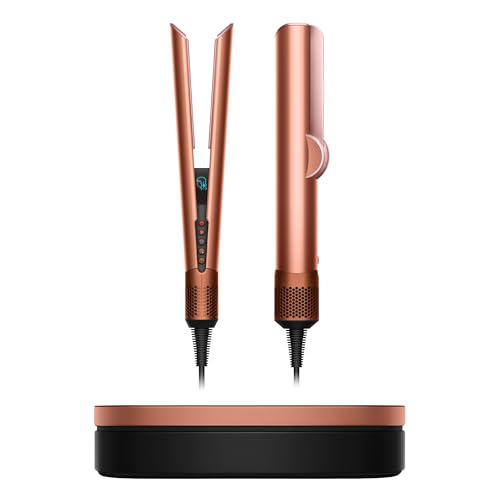
- Wet to dry straightening with air. No hot plates. No heat damage.¹
- Reduces time spent drying and styling by an average of 25%.⁴
- Airflow is projected downwards at a 45° angle to create the tension needed to align hair for a smooth end style – with l…
This Dyson Airstrait review looks at what the tool is designed to do, what independent reviewers found when they tested it, and which hair types and routines it suits. It draws on published testing from other outlets, with each finding attributed to its source, rather than claiming our own.
Quick Verdict
The Dyson Airstrait can straighten hair without a flat iron, but “straight” needs a definition. Reviewers consistently describe smooth, shiny, naturally straight results, especially on wavy and slightly curly hair. Pin-straight, poker-flat results are less consistent.
It’s best for people who currently blow-dry and then flat iron, want to cut that routine down, and have the budget for it. It’s a weaker fit if you want razor-straight ends, lots of volume, curls, or a travel-friendly tool.
What Is the Dyson Airstrait?
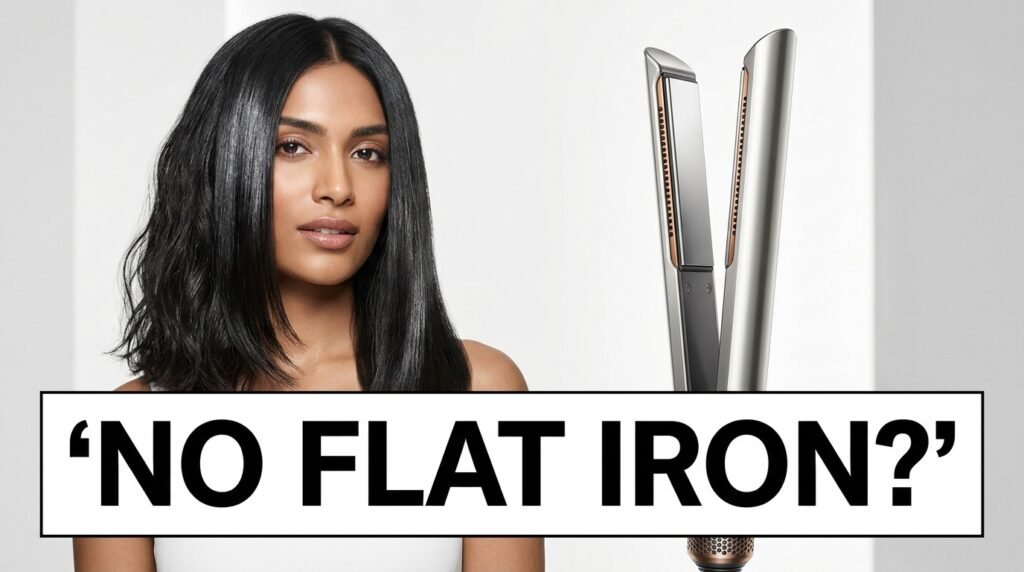
The Airstrait is a wet-to-dry hair straightener from Dyson. Instead of heated plates, it uses two unheated arms that clamp around a section of hair while high-pressure air is released through vents. You can read Dyson’s own description on the Dyson Airstrait official product page.
| Quick Specs | Details |
|---|---|
| Product | Dyson Airstrait |
| Type | Air-based hair straightener |
| Wet-to-dry | Yes (designed for towel-dried hair) |
| Straightening method | High-pressure heated airflow, no traditional hot plates |
| Dry mode | Yes, for touch-ups and refreshing dry hair |
| Weight | About 1.3 lb (536 g) in hand; about 2.2 lb (935 g) including the body, per TechRadar |
| Price | Around $499.99 (recent reference; verify current pricing) |
| Best suited for | Wavy to slightly curly hair, time-pressed routines, people wary of hot plates |
Tom’s Guide lists the wet settings at 80°C, 110°C and 140°C, and the dry settings at 120°C and 140°C plus a boost option. A cool setting helps set the style, and the LCD screen shows your current mode. Dyson also built in automatic pause and standby behavior, which TechRadar noted reduces airflow when the arms are open.
A note on pricing: $499.99 is the figure used in current reference listings, but retail prices shift with sales, colorways and retailers. Tom’s Guide has reported discounted prices during sales periods, so check the current price before buying.
- Wet to dry straightening with air. No hot plates. No heat damage.¹
- Reduces time spent drying and styling by an average of 25%.⁴
- Airflow is projected downwards at a 45° angle to create the tension needed to align hair for a smooth end style – with l…
How Does the Dyson Airstrait Straighten Hair Without Hot Plates?
Think of a blow-dry with a very good brush, minus the brush. Dyson says the Airstrait sends a blade of high-pressure air downward at roughly a 45-degree angle through narrow vents in the arms. As you pull the tool down a section, the airflow does two jobs at once.
- It dries the hair. Moving air carries moisture away.
- It holds the hair in tension and aligns it. The clamped arms keep the section taut while the airstream smooths it in one direction.
Why does wet hair work better here? Hair is easier to reshape while it’s damp, because water temporarily loosens the hydrogen bonds that hold a curl or wave in place. As the hair dries under tension and alignment, it sets in a straighter shape. This is the same principle behind a good blowout, just packaged into a flat-iron-shaped tool.
Dyson’s promise of reduced heat damage is a design claim, not a guarantee. The tool avoids clamping hair between very hot metal plates, and it regulates air temperature. But hot air is still hot, and independent testing hasn’t established that any styling method is universally damage-free. TechRadar’s reviewer, for example, framed the benefit as reduced heat exposure. That’s a more careful claim than “no damage.”
Does the Dyson Airstrait Really Work?
For a lot of people, yes, with caveats about the finish.
TechRadar’s reviewer has thick, wavy, porous hair and reported going from wet to straight in about 10 minutes, less than half her usual dry-and-straighten time. She described the results as silky and smooth but not pin-straight, and she preferred that natural look.
In the TechRadar’s Dyson Airstrait review, she also noted that results loosened into waves when hair got damp or humid. On her partner’s curlier hair, she had a harder time getting it fully straight and saw less shine.
The Tom’s Guide Dyson Airstrait review tested on thick, wavy, short hair with some dye damage at the ends. The reviewer averaged about 18 minutes from fully wet to naturally straight and dry, roughly half her usual time. She found the results often looked like a salon blowout, lasting a few days, but didn’t always reach poker-straight.
If you want an additional data point, Allure’s Dyson Airstrait testing is worth reading alongside these. We couldn’t access the full page while preparing this article, so we’re not attributing specific findings to it here.
Does It Really Replace a Flat Iron?
Partly. This is where “without a flat iron” needs an honest answer.
- It can replace your blow dryer plus flat iron for a wet-to-dry routine if a smooth, natural straight finish is what you’re after.
- It may not replace a flat iron if you rely on one for bone-straight ends, tucked-under bobs, bangs, or curls.
- Dry mode is not a full flat-iron substitute. TechRadar’s reviewer said dry styling wasn’t as effective as wet mode and mostly tamed frizz and flyaways. Tom’s Guide found dry mode gave a very similar result to post-wash styling but felt the heat was a bit much for her hair.
The most accurate framing is that the Airstrait replaces a step, or two steps, for some people. It doesn’t replace every job a flat iron does.
Does It Produce Pin-Straight Hair?
Not reliably, and it helps to separate the terms.
- Naturally straight: hair that looks like it dried straight without much effort. This is the Airstrait’s strongest suit.
- Smooth straight: sleek and frizz-controlled, with a little movement. Reviewers generally report this.
- Salon blowout straight: smooth with body. Achievable, though Tom’s Guide and TechRadar both found volume and root lift harder to get.
- Poker/pin straight: ruler-flat from root to tip. Both Tom’s Guide and TechRadar said this wasn’t consistently achieved. Tom’s Guide did note that dry mode delivered pin-straight results, though the reviewer found it hard to add volume or touch up her roots.
Hair texture and technique matter a great deal, which is why reviewers with different hair reach different conclusions.
Performance by Hair Type
The strongest reviewer evidence covers thick, wavy hair. Other categories are inferred from reviewer commentary and how the tool works, so treat those as likelier outcomes rather than guarantees.
Fine hair. TechRadar’s earlier hands-on piece reported taking a section of towel-dried fine hair to dry in just two passes. Fine hair tends to dry quickly, but volume may be a concern given how flat air-straightened hair can look.
Medium hair. Likely the sweet spot. Medium density gives the airflow room to work without extra passes.
Thick hair. Both TechRadar and Tom’s Guide tested on thick hair with good results. Tom’s Guide found smaller sections worked better, and TechRadar noted the tool handled fairly chunky sections without snagging. Expect the process to take longer on very dense hair.
Coarse hair. Coarse strands can resist reshaping. Expect more passes and possibly a less sleek finish. This is a place where a traditional flat iron may still do better.
Straight hair. It can speed up drying and add smoothness, but you may not need a $500 tool for it.
Wavy hair. This is where the reviews are most positive. Tom’s Guide and TechRadar both tested wavy hair and reported smooth, natural results.
Curly hair. Results are more mixed. TechRadar’s reviewer struggled to fully straighten her partner’s curlier hair and saw less shine. Dyson has said the tool can “lengthen” tightly curled hair rather than pin it flat, according to Tom’s Guide.
Coily hair. Tom’s Guide noted that Dyson acknowledged the tool may produce minimal lengthening on coily hair. TechRadar noted that reaching the roots matters most for curly and coily hair, and the Airstrait’s bulk limits that. If you have 4C hair, watch demonstrations on hair like yours before buying.
Frizz-prone hair. Reviewers generally reported frizz control on wavy hair. However, humidity can bring waves back, per TechRadar.
Color-treated or heat-sensitive hair. Lower heat exposure and no plate clamping are the appeal. TechRadar’s reviewer recommended it for easily damaged hair, but this is a reviewer opinion, not proof of safety. Use lower settings and a heat protectant.
- Wet to dry straightening with air. No hot plates. No heat damage.¹
- Reduces time spent drying and styling by an average of 25%.⁴
- Airflow is projected downwards at a 45° angle to create the tension needed to align hair for a smooth end style – with l…
Wet Mode vs. Dry Mode
Wet mode is the headline feature: towel-dried hair goes in, dry and straightened hair comes out. Most reviewers used it as their primary mode.
Dry mode is for touch-ups. It can calm frizz and refresh second-day hair, but it isn’t as transformative as wet mode. TechRadar’s reviewer said it didn’t do much beyond taming frizz and flyaways. Tom’s Guide said dry mode did the job on pin-straightness but didn’t find herself using it as often. Neither positions dry mode as a full flat-iron replacement.
Use Wet mode for post-shower styling. Use Dry mode for quick morning refreshes when overnight waves need smoothing.
How Wet Should Your Hair Be?
Not soaking wet. “Wet-to-dry” doesn’t mean stepping out of the shower and going straight in.
Dyson’s Dyson Airstrait user guide recommends towel-dried hair, and the tool is designed for that starting point. Pre-drying the roots first matters too: with the arms closed, the Airstrait works like a hair dryer for your scalp area, and Tom’s Guide’s reviewer followed Dyson’s recommendation to dry the roots before working through the mid-lengths and ends.
Skipping this step is where people run into trouble. Dripping hair is harder to control and slower to dry, and damp roots can leave you with wet patches at the end of styling.
How Long Does the Dyson Airstrait Take?
There is no universal number. Independent reviewers reported:
- About 10 minutes for TechRadar’s reviewer with thick, wavy, porous hair.
- About 18 minutes on average for Tom’s Guide’s reviewer with short, thick, wavy hair.
Your time will depend on:
- Length and density: more hair means more sections
- Thickness and curl pattern: tighter textures usually need more passes
- Section size: smaller sections work better but take longer
- Technique: slow, steady passes work; rushing means re-doing sections
- Starting moisture: a properly towel-dried head saves time
Expect a learning curve. Both reviewers found their pace improved with practice.
Does It Really Save Time?
It depends on what you mean by “time savings.”
“One tool instead of two” is true for many people. You skip switching from dryer to flat iron and doing a second pass.
“Faster drying than every hair dryer” is a different claim. Reviewers reported shorter total routines, but that’s the combined dry-plus-straighten time. Nobody has shown the Airstrait dries hair faster than a strong dryer would on its own. Separate those two claims when you’re evaluating whether it fits your morning.
Dyson Airstrait vs. Traditional Flat Iron
| Feature | Dyson Airstrait | Traditional Flat Iron |
|---|---|---|
| Straightening method | Airflow through unheated arms | Heated plates clamp hair |
| Wet-hair use | Yes, designed for it (towel-dried) | Not recommended on wet hair |
| Dry-hair use | Yes, Dry mode, but less effective per reviewers | Yes, the main use |
| Heat exposure | Hot air, no plate contact | Direct plate contact |
| Finish | Smooth, natural straight | Sleek, can be pin-straight |
| Speed | Combines drying and straightening | Needs dry hair first |
| Frizz control | Good on wavy hair, per reviewers | Strong on most textures |
| Pin-straight results | Inconsistent | Typically stronger |
| Volume | Harder, per Tom’s Guide and TechRadar | Depends on technique |
| Curling/waving versatility | Limited | Good |
| Price | Around $499.99 | Wide range, often far lower |
| Best for | Wavy hair, routine simplifiers | Precision styling, curls and bends |
Dyson Airstrait vs. GHD Duet Style
The key difference is the mechanism. The Airstrait uses airflow without traditional hot plates. The GHD Duet Style combines airflow with heated plates. TechRadar has pointed out this distinction, describing the Duet Style as the closest alternative to the Airstrait’s approach. For a deeper look at the other option, see our GHD Duet Style review.
| Feature | Dyson Airstrait | GHD Duet Style |
|---|---|---|
| Technology | Airflow only | Airflow plus heated plates |
| Plate contact | None | Yes |
| Wet-to-dry | Yes | Yes |
| Likely appeal | Lower plate exposure, natural finish | Sleeker, closer-to-flat-iron feel |
| Winner | Depends on your priorities | Depends on your priorities |
If you’re heat-cautious and prefer a natural look, the Airstrait’s approach may appeal. If you want more of a flat-iron finish from a wet-to-dry tool, the plate-based approach may feel more familiar. Neither is a universal winner.
Dyson Airstrait vs. Dyson Corrale
- Technology: The Corrale uses heated plates (Tom’s Guide describes manganese copper alloy plates). The Airstrait uses airflow.
- Wet/dry: The Corrale is a dry-hair straightener. The Airstrait handles wet and dry.
- Portability: The Corrale is cordless, and TechRadar notes a flight-safe mode. The Airstrait is corded and TechRadar’s reviewer couldn’t get it to work abroad with a plug adapter.
- Versatility: The Corrale can curl and wave. The Airstrait is mostly a straightening tool.
- Who each is for: The Corrale suits people who want a traditional flat iron done Dyson-style. The Airstrait suits people who want to fold blow-drying into the straightening step.
Real-World Limitations
- High price. Around $499.99, though sales happen.
- Size and weight. TechRadar called it clunky and heavy for a straightener, and its reviewer noted light arm ache during long sessions.
- The cord and plug. Both Tom’s Guide and TechRadar criticized the bulky safety plug, which has test and reset buttons and may not fit outlets with furniture in front.
- Learning curve. Small sections, correct orientation and root-first drying all take practice.
- Roots and bangs. TechRadar said it can’t get right up to the root. Tom’s Guide found bangs and face-framing pieces hard to style.
- Limited curling. It’s mainly a straightening tool.
- Humidity. TechRadar reported that styled hair loosened in damp conditions.
- Not always pin-straight.
Pros and Cons
Pros
- Combines drying and straightening
- No traditional hot plates
- Smooth, natural-looking results reported by multiple reviewers
- Wet and Dry modes with customizable settings
Cons
- Expensive
- Bulky, heavy, and corded
- Results vary by hair type
- Harder to get volume and root lift
- Not consistently pin-straight
Who Should Buy the Dyson Airstrait?
- People with wavy or slightly curly hair who want a smooth, natural straight finish
- Anyone who blow-dries and flat irons every wash and wants a shorter routine
- People who prefer to limit direct plate contact
- Buyers comfortable with a learning curve and a premium price
- Wet to dry straightening with air. No hot plates. No heat damage.¹
- Reduces time spent drying and styling by an average of 25%.⁴
- Airflow is projected downwards at a 45° angle to create the tension needed to align hair for a smooth end style – with l…
Who Should Skip It?
- Anyone wanting reliable poker-straight results on tightly curled or coily hair
- People who want to curl, wave or add lots of volume with one tool
- Frequent travelers
- Budget-focused shoppers who are happy with a dryer and a good flat iron
Is the Dyson Airstrait Worth $499.99?
It depends on how you’ll use it. If you style your hair several times a week, currently spend a long time on dry-then-straighten routines, and your hair type fits the reviewer-supported use case, the time savings and lower plate exposure can justify the price for some. If you style occasionally, want pin-straight results, or have a tight budget, a separate dryer and flat iron will likely serve you better for much less.
If you’re weighing other options, our T3 Featherweight StyleMax review, T3 AireBrush Duo review, Shark SpeedStyle review and roundup of the Best Luxury Hair Dryers in 2026 cover other approaches to the same problem.
How to Get the Best Results
- Start with towel-dried hair, not dripping wet.
- Pre-dry your roots with the arms closed.
- Use smaller sections, especially on thick hair.
- Go slowly and steadily. Rushing leads to repeat passes.
- Hold it the right way up. Vents face down.
- Choose settings for your hair. Start lower if it’s fine or color-treated, and use a heat protectant.
- Use the cool shot to set the style.
- Use Dry mode for touch-ups, not as a full reset.
Frequently Asked Questions
Can the Dyson Airstrait really straighten hair without a flat iron?
Yes, for many people, using airflow rather than hot plates. The finish is usually smooth and natural rather than ruler-flat.
Does it work on wet hair?
Yes, but it’s designed for towel-dried hair with roots pre-dried, not soaking wet hair.
Can it replace a flat iron?
Partly. It can replace a dryer-plus-flat-iron routine for some hair types, but not every task a flat iron does.
Does it make hair pin straight?
Not consistently. Tom’s Guide and TechRadar both reported natural-looking rather than poker-straight results.
Is it good for thick hair?
Reviewers with thick, wavy hair had good results, generally with smaller sections.
Is it good for curly hair?
Results are more mixed. TechRadar’s reviewer struggled to fully straighten curlier hair.
Is it good for fine hair?
Likely effective for drying and smoothing, though volume may be limited.
Does it damage hair?
Dyson designed it to reduce heat exposure, but “no damage” isn’t a scientific guarantee. Use sensible settings.
Can you use it on dry hair?
Yes, in Dry mode, mainly for touch-ups and frizz control.
Is it worth the money?
For frequent stylists with compatible hair, it can be. For occasional users, probably not.
What’s the difference between the Airstrait and the GHD Duet Style?
The Airstrait uses airflow only. The Duet Style combines airflow with heated plates.
How long does it take?
Reviewers reported roughly 10 to 18 minutes on thick, wavy hair. Your time will vary.
Final Verdict
The Dyson Airstrait does what it says in a specific sense. It can dry and straighten hair in one step without traditional hot plates, and independent reviewers reported smooth, shiny, natural-looking results with real time savings. What it doesn’t do reliably is deliver pin-straight hair, add volume, or work equally well on every texture.
If your hair is wavy to slightly curly, your routine is long, and the price doesn’t sting, it’s a strong contender. If you want precision, curls, or the lowest price, skip it.
- Wet to dry straightening with air. No hot plates. No heat damage.¹
- Reduces time spent drying and styling by an average of 25%.⁴
- Airflow is projected downwards at a 45° angle to create the tension needed to align hair for a smooth end style – with l…