
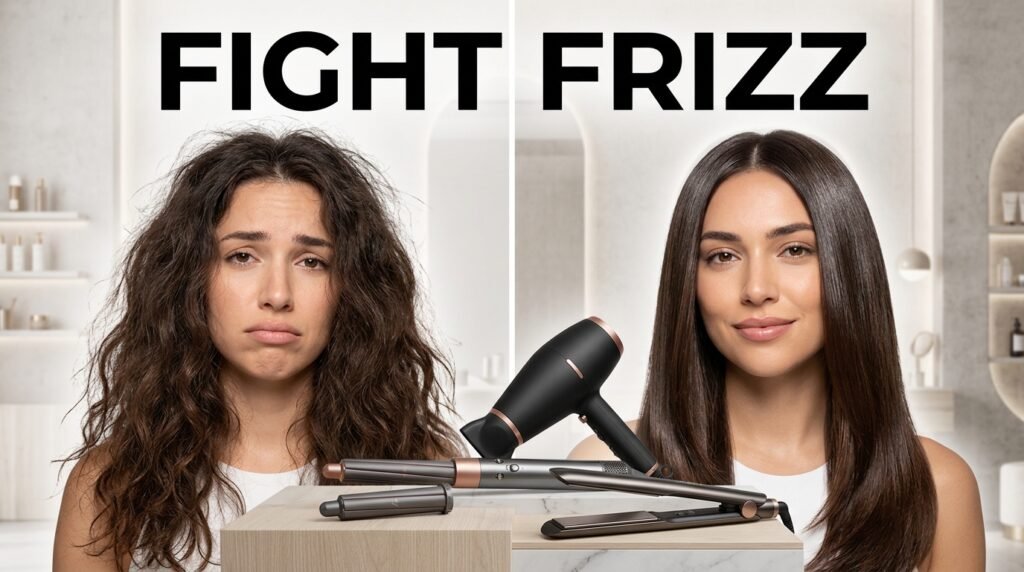
A $500 styling tool will not fix frizz on its own. Some premium tools handle frizz very well, and some are expensive versions of features you can get for less. The difference usually comes down to what is causing your frizz, your hair type, and how you style.
This guide covers the best premium hair tools for frizzy hair by use case rather than in an arbitrary ranking. It explains what to look for, where premium pricing makes sense, and where a cheaper dedicated tool does the same job. If you want a broader overview of the category first, our roundup of the best luxury hair styling tools is a good companion.
A note on evidence: Natural Skin Studio has not hands-on tested every tool mentioned here. Where we describe technology, we attribute it to the manufacturer. Where we give general hair-care guidance, we say so. Prices change often, so we use price tiers instead of exact figures.
The Best Premium Hair Tools for Frizzy Hair at a Glance
Price tiers are approximate: $$$ is roughly the premium mid-range, $$$$ is top-tier pricing. Check current retailer pricing before buying.
| Tool / Category | Best For | Frizz-Control Approach | Hair Type | Main Advantage | Main Limitation | Price Tier |
|---|---|---|---|---|---|---|
| Dyson Airwrap (current generation) | Smooth, bouncy styling from damp hair | Airflow-based attachments, no traditional hot plates | Fine to medium, wavy, straight | Dries and styles in one tool | Steep learning curve; less sleek than a flat iron | $$$$ |
| Dyson Airstrait | Straight, sleek wet-to-dry styling | Airflow plates instead of heated plates (per Dyson) | Wavy to thick, straight-leaning | Straightens from damp without a separate blow-dry | Won’t give the glass-like finish some plates can | $$$$ |
| Shark FlexFusion | Multi-tool flexibility at lower cost | Air styling plus straightening in one system | Most types | Versatility for the price tier | Attachment mix varies by set | $$$ |
| ghd Duet Style | 2-in-1 wet-to-dry smoothing | Hot air styling that dries and smooths in one step (per ghd) | Wavy to thick | Simplified routine | Less control than separate dryer + iron | $$$ |
| Dyson Supersonic / premium dryers | Better drying with less rough handling | Controlled airflow, concentrator nozzle | All types | Foundation of a frizz-free routine | Doesn’t finish or straighten by itself | $–$$ |
| T3 AireBrush Duo | Smooth, brushed-out blowouts | Hot-air brush with interchangeable heads | Medium to long, straight to wavy | Fast blowout from damp hair | Weaker on very thick or tight curls | $$$ |
| ghd Platinum+ / ghd Max | Sleek, humidity-resistant straight styles | Ceramic heated plates with temperature management | Medium to thick (Max for long/thick) | Precise, polished finish | Direct heat on dry hair needs care | $$$ |
What Actually Causes Frizz?
Frizz has several causes, and the right tool depends on which one you are dealing with.
Humidity-related frizz. Hair absorbs moisture from the air, and the shaft swells unevenly. This is why hair that looks smooth indoors can puff up within minutes outside. It affects nearly every hair type, but it is most visible in wavy and curly hair.
Rough drying and friction. Aggressive towel rubbing, brushing wet hair, and blasting a dryer in random directions can lift the outer cuticle and create a fuzzy surface. This is the most fixable cause, and it is where a better dryer and better technique help most.
Flyaways. These are short, fine, or broken strands that stand away from the rest of the hair. They can come from breakage, regrowth, static, or dry air. Smoothing tools help, but so do gentler handling and finishing products.
Dry or damaged hair. Hair that is dry from repeated heat, chemical processing, or sun exposure tends to have a rougher surface and takes on humidity more easily. A tool can improve how it looks and lies, but it cannot repair damage.
Fine hair. Fine strands are easily weighed down or roughed up. Frizz here often looks like flyaways and static rather than volume.
Thick or coarse hair. More hair and a larger diameter mean more surface area for frizz, and longer drying time. Time and tension are the main challenges.
Wavy and curly hair. Curl patterns naturally have more raised cuticle points and more moisture-seeking surface. Frizz here is often about curl definition rather than smoothness alone. Sometimes diffusing beats straightening.
Color-treated or heat-damaged hair. Processed hair can be more porous. Heat management matters more here, which changes which tools make sense.
One important caveat: a styling tool can improve the appearance and manageability of frizz. It is not a permanent fix for damaged hair.
What Should You Look for in a Premium Hair Tool for Frizzy Hair?
Ignore the marketing and focus on features that change the outcome.
Controlled airflow. A dryer with strong, focused airflow dries hair faster, which means less total heat exposure. Airflow direction matters as much as power.
Concentrator nozzles. A narrow nozzle lets you point air down the hair shaft from root to tip, which helps the cuticle lie flat. A dryer without a good nozzle usually scatters air and roughens the surface.
Ionic technology. Ionic dryers are designed to reduce static, and static is a real contributor to flyaways and fuzz. Manufacturers often claim ionic technology also reduces frizz and speeds up drying. Independent evidence on how much difference it makes beyond reducing static is limited, so treat it as a helpful but not decisive feature. If you want to browse ionic and other options, see our guide to the best professional hair dryers for home use.
Ceramic surfaces. For flat irons, ceramic plates are popular because they are generally designed to heat evenly and glide smoothly. A ceramic hair straightener with smooth plate edges reduces snagging, a small but real cause of frizz. Look for even heat and no rough seams.
Even heat distribution and adjustable temperature. Hot spots make it tempting to go over sections repeatedly. Adjustable temperature matters most for fine, color-treated, or previously damaged hair, which usually needs lower settings.
Intelligent heat control. Several premium tools monitor and regulate temperature. Manufacturers say this prevents temperature spikes. These are manufacturer claims, but consistent temperature is a sensible feature, particularly for repeated use.
Cool shot. A cool-air button lets you set a style once it is dry. Many stylists use it to help a shape hold, and it is a simple feature that works.
Smoothing brushes and finishing attachments. These are useful only if you will use them. A tool with ten attachments and a drawer full of unused heads is worse value than a good dryer you reach for daily.
Plate width. Narrow plates suit short hair and curling; wider plates suit long or thick hair because they cover more hair per pass, cutting the number of passes.
Diffusers. If you have wavy or curly hair, a good diffuser can improve curl definition and reduce frizz without flattening your pattern.
Ergonomics, weight, and warranty. A heavy tool tires your arm, and tired arms mean rushed, uneven styling. Also check the warranty length and whether repairs are practical. At premium prices, support matters.
Humidity performance. No tool controls humidity by itself. Frizz control in humid weather depends on smooth cuticles, product, and sealing the style with cool air. Be skeptical of any tool marketed as “humidity-proof.”
Best Premium Hair Tools for Frizzy Hair
The products below are organized by use case rather than ranked. Each one suits a different kind of frizz and routine.
Best Premium Multi-Styler for Frizz-Prone Hair: Dyson Airwrap (Current Generation)
What it is: An air-based multi-styler that dries, smooths, curls, and waves.

- Program your perfect curls. App enabled for one-touch, personalized styling.
- Engineered for straight and wavy hair.
- 6-in-1 style versatility. Dry, curl, wave, shape, and smooth with no heat damage.
Why it may help with frizz: It uses airflow rather than traditional hot plates. Dyson says the attachments use airflow to style and that its heat control aims to keep temperatures moderate. That is a manufacturer claim, but the general approach means less direct plate contact with the hair.
Best for: Fine to medium hair, wavy hair, and people who want a smooth, voluminous blowout look rather than pin-straight hair.
Main advantages: It can replace a dryer, brush, and curling tool in one. The smoothing attachments are useful for taming flyaways.
Main limitations: There is a learning curve. On very thick or coarse hair, it can take longer and may not deliver a sleek finish. It is also among the most expensive tools in this guide.
Who should consider it: Shoppers who want several styles from one tool and will use it most days.
Who should skip it: Anyone whose main goal is bone-straight, glossy hair. A straightener or wet-to-dry styler will do that more directly.
Cheaper alternative: A good dryer plus a hot-air brush covers the drying and smoothing part for much less. For more options in this class, see our comparison of the best hair multi-stylers in 2026.
Best Premium Wet-to-Dry Styler for Straightening: Dyson Airstrait
What it is: A straightener that uses high-speed airflow instead of heated plates and is designed to work on damp hair.
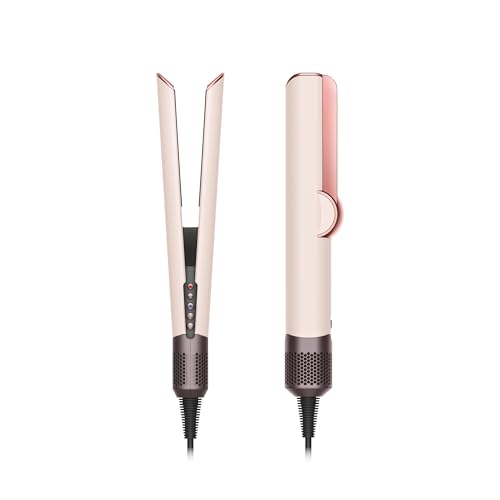
- Your routine, simplified. The Dyson Airstrait dries and straightens hair simultaneously. Take hair from wet to a finishe…
- Our latest hair care technology uses high-pressure airflow to straighten hair as it dries. Air is precisely heated and p…
- Intuitive airflow when you need it. Your machine senses when hair is between the arms and automatically drops to low air…
Why it may help with frizz: According to Dyson’s official Airstrait page, the tool dries and straightens hair in one step using air. That is a manufacturer claim. The practical benefit is skipping a separate blow-dry, which reduces cumulative heat and handling.
Best for: Wavy to thick hair that you want straighter and smoother, especially if you like a soft finish over a hard-pressed one.
Main advantages: It shortens the routine, and it is less likely to leave the creased, over-pressed look that a hot flat iron can produce on damp hair.
Main limitations: The finish is typically softer than what a heated ceramic plate produces. Very coarse or tightly coiled hair may need more passes.
Who should consider it: People who currently blow-dry then flat-iron and want to merge both steps. Our Dyson Airstrait review covers the details.
Who should skip it: Anyone who wants glass-smooth, poker-straight hair or who already owns a good dryer and straightener they like.
Cheaper alternative: A quality dryer plus a ceramic flat iron used at a moderate temperature.
Best Value Premium Multi-Tool Route: Shark FlexFusion
What it is: A system from Shark that combines air styling and straightening in one set. According to the manufacturer’s FlexFusion page, sets are built from selectable attachments, so what you get depends on the configuration you choose.

- FLEXFUSION STYLE-SAFE TECHNOLOGY: Powerful air + heat-controlled ceramic fuse together for no heat damage styling and ho…
- STYLE WET HAIR: Easily dry and style wet hair with no heat damage.
- RE-STYLE DRY HAIR: Achieve stunning blowouts as they are on a typical wash day.
Why it may help with frizz: It gives you an air-drying step and a straightening step in one system, so you can dry gently with air and then smooth as needed.
Best for: Shoppers who want multi-styler flexibility without paying top-tier prices.
Main advantages: Versatility and a lower entry price than the top tier.
Main limitations: Attachments vary by set, so check the contents before buying. Quality and finish may not match the highest-end tools.
Who should consider it: Anyone comparing multi-stylers on a budget. See our Shark FlexFusion review for a closer look.
Who should skip it: If you only style one way, a single-purpose tool will be simpler and often better.
Cheaper alternative: Shark’s more affordable stylers, such as the SpeedStyle or FlexStyle lines, cover part of the same ground.
Best Premium 2-in-1 Wet-to-Dry Styler: ghd Duet Style
What it is: A hot air styler that ghd designed to dry and smooth hair in one step, described on the ghd wet-to-dry styler page.

- DRY & STYLE WITH JUST ONE TOOL ― Revolutionary air-fusion technology dries and straightens hair at the same time, quickl…
- LUXURIOUS RESULTS EVERYDAY ― Unprecedented softness for up to 48 hours while protecting your hair’s natural moisture. Un…
- UNCOMPROMISING STYLE ― Advanced floating plates with ultra-glass coating ensure incredibly smooth and snag-free gliding …
Why it may help with frizz: It combines drying and smoothing, which cuts down on steps. ghd states it is designed to deliver a smooth finish from wet hair. As always, that is the manufacturer’s claim.
Best for: Wavy to thick hair and people who want a quick, straight-leaning finish.
Main advantages: Simplified routine and a well-known brand with straightforward controls.
Main limitations: Less control than separate tools, and it is not a substitute for a dedicated dryer if you like a lot of volume.
Who should consider it: People short on time who still want smooth results.
Who should skip it: Anyone who already has a dryer and flat iron they love.
Cheaper alternative: A dryer with a smoothing nozzle and a mid-priced ceramic flat iron.
Best Premium Hair Dryer for Frizz Control: Dyson Supersonic and Other Premium Dryers
What it is: A high-end dryer, such as the Dyson Supersonic or a professional-style dryer from T3 or similar brands.

- Fast drying. The small, powerful Dyson digital motor V9 combined with Air Multiplier technology produces a high-pressure…
- Intelligent heat control. The Dyson Supersonic hair dryer measures air temperature over 40 times a second and regulates …
- Magnetic attachments adjust quickly and easily. Heat Shield technology keeps the surfaces of attachments cool, even duri…
Why it may help with frizz: A good dryer dries faster, and a concentrator nozzle lets you follow the hair shaft. Many premium dryers regulate temperature, which manufacturers say protects hair from extreme heat. That claim is theirs, but consistent temperature is a sensible design goal.
Best for: Almost everyone. This is often the highest-impact upgrade for frizz.
Main advantages: Faster drying, better airflow control, and quieter operation in many models.
Main limitations: A dryer does not straighten or curl. You still need finishing tools for a sleek style.
Who should consider it: Anyone who blow-dries regularly. For a lighter option, our T3 Featherweight StyleMax review looks at a lightweight pro-style dryer.
Who should skip it: Air-dry-only people.
Cheaper alternative: A mid-priced ionic hair dryer with a concentrator nozzle can perform very well for most hair.
Best Premium Hot-Air Brush: T3 AireBrush Duo
What it is: A hot-air brush with interchangeable brush heads. The brand describes its technology in the T3 Micro Educational Hub.
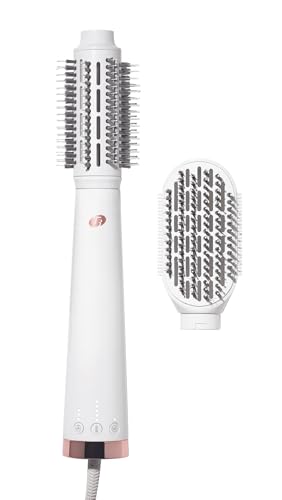
- What it is: If you’re in search of consistently bouncy waves, this T3 hot-air brush duo is the answer. This carefully en…
- What it does: An award-winner for good reason, this brush features two interchangeable heads, proprietary IonFlow techno…
- Rotating cord
Why it may help with frizz: A brush with airflow lets you tension the hair while drying, which smooths the cuticle and reduces the need for a follow-up flat iron on many hair types.
Best for: Medium to long, straight or wavy hair and anyone wanting a smooth, brushed-out blowout.
Main advantages: Speed and a familiar technique. Our T3 AireBrush Duo review goes into fit and value.
Main limitations: Very thick, coarse, or tightly coiled hair may be difficult to work through.
Who should consider it: People who like a salon-style blowout at home.
Who should skip it: Very thick or tightly coiled hair, or anyone who already blow-dries well with a round brush.
Cheaper alternative: A mid-priced hot-air brush, or a dryer with a round brush.
Best Premium Straightener for Sleek, Frizz-Free Hair: ghd Platinum+ and ghd Max
What it is: Premium ceramic flat irons. The ghd Platinum+ is the standard-width model, and our GHD Max review covers the wider-plate version.
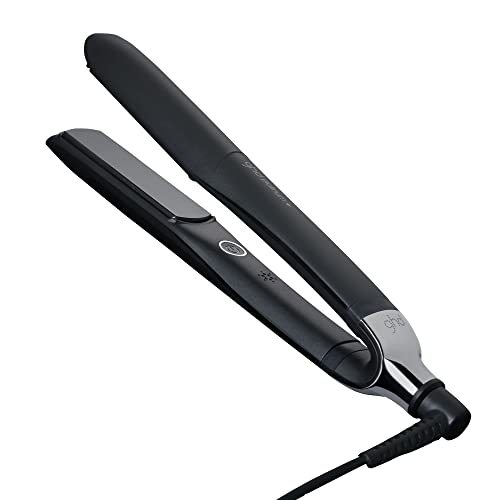
- SALON-TESTED RESULTS, NO GUESSWORK: Ultra-Zone tech reads your hair 250x/sec for 70% stronger hair and 75% more shine in…
- NO DIAL, NO DAMAGE: Locked at ghd’s stylist-tested 365°F “sweet spot” so you never guess a setting. Up to 2x color prote…
- PREMIUM CERAMIC FLOATING PLATES: Precision-milled ceramic plates with a whisbone hinge glide smoothly and maintain even …

- Wider plates for faster styling: 2” ceramic plates are 70% larger* to straighten long, thick, or curly hair in half the …
- Shine and smoothness in one pass: Delivers up to 80% more shine and 2x less frizz with high-gloss plates and dual-zone h…
- Optimum temperature, no guessing: Pre-set to the scientifically proven 365ºF for styling without extreme heat damage
Why it may help with frizz: Heated plates flatten the cuticle and give a polished, smooth finish. ghd says its temperature management is designed to keep heat consistent. That is a manufacturer claim, but even heat is helpful.
Best for: Sleek, straight looks, and hair that resists air-based tools. The wider plates suit long or thick hair.
Main advantages: Precise, polished results and generally long-lasting smoothness when used on fully dry hair.
Main limitations: Direct heat on the hair. Use a heat protectant and moderate temperature, and avoid repeated passes.
Who should consider it: Anyone whose top priority is a flat, glossy finish.
Who should skip it: Very damaged hair, or anyone who prefers to avoid direct plate heat.
Cheaper alternative: A well-reviewed mid-priced ceramic straightener with adjustable temperature can give a similar finish for many hair types.
Best Premium Tool for Thick, Frizzy Hair
Thick hair needs coverage and time. A wide-plate straightener such as the ghd Max, combined with a strong dryer and a smoothing nozzle, generally works better than an air styler alone. Dyson’s Airstrait can suit thick hair that is wavy rather than tightly coiled. Expect to work in smaller sections.
Best Premium Tool for Fine, Frizzy Hair
Fine hair does not need aggressive heat. A gentle dryer with temperature control, a smoothing brush, and a lower-heat approach usually makes more sense. An air-based styler like the Airwrap can work well because it avoids high plate temperatures, but its volume and finish do not suit everyone.
Best Premium Tool for Wavy or Curly, Frizz-Prone Hair
For wavy and curly hair, a quality dryer with a diffuser often beats a straightener because it protects curl pattern while controlling frizz. Air-based stylers can also help with curl definition. If you straighten occasionally, use a wet-to-dry tool or a flat iron at moderate heat.
Best Premium Hair Tools by Hair Type
- Fine hair: Prioritize temperature control and lightweight tools. A premium dryer with a nozzle or an air-based styler tends to be gentler than high-heat plates.
- Thick or coarse hair: Wide plates, strong airflow, and a smoothing nozzle. Time-saving matters here.
- Wavy hair: Flexible tools. A multi-styler or a dryer with a diffuser works well, and a wet-to-dry tool helps if you also want a straight look.
- Curly hair: A diffuser-equipped dryer is usually the priority. Straightening tools are optional and best used sparingly.
- Coily hair: Focus on gentle drying and low-tension styling. Air-based tools can help with stretching hair before a smoothing pass, but results vary, so check tool reviews from people with similar hair.
- Long hair: Wide plates, lighter tools, and a good clip system. Fast drying reduces arm fatigue.
- Short hair: Narrow plates or smaller brush heads for control near the roots.
- Color-treated or damaged hair: Lower, adjustable temperatures and fewer passes. Tools that control airflow and heat evenly matter more than added attachments.
Premium Hair Tools vs Cheaper Alternatives
Spending anywhere from $200 to $700 may make sense in some cases and not in others.
It may make sense if:
- You style most days, so cost per use drops quickly.
- The tool replaces two or three others you already own.
- Your hair type matches the tool’s strengths, such as a wet-to-dry styler for thick hair you blow-dry and then iron.
- You want features that cheaper tools lack, such as consistent temperature control and stronger warranty coverage.
It may not make sense if:
- You style once or twice a week.
- You only use one technique, such as straightening.
- The premium feature is mostly a marketing term. Ionic and ceramic features exist in cheaper tools too.
- You do not have the time to learn a new technique.
A simple calculation helps: divide the price by the number of times you will realistically use the tool over two years. A $500 tool used 300 times costs less per use than a $150 tool used 20 times.
Build quality and warranty also matter. Premium tools often come with longer coverage, but it is worth reading the terms before you buy.
How to Use Premium Hair Tools Without Making Frizz Worse
Technique matters as much as the tool.
- Start with conditioned hair. Dry, rough hair frizzes more.
- Skip rough towel drying. Blot or squeeze instead of rubbing.
- Use a heat protectant. Apply it evenly before any heat styling.
- Use appropriate heat. The American Academy of Dermatology’s guidance on styling without damage recommends limiting heat exposure and using lower settings where possible, and that is sensible general advice regardless of the tool.
- Point airflow down the hair shaft. Aim from root to tip so the cuticle lies flatter.
- Avoid excessive passes. One or two controlled passes usually beats five rushed ones.
- Work in sections. It saves time and reduces missed patches.
- Finish with cool air. A cool shot can help a style set.
- Use a suitable finishing product. A light smoothing oil or serum can reduce flyaways, but a little goes a long way.
- Go easy on damaged hair. Consider lower temperatures and fewer heat sessions.
Common Mistakes That Make Frizzy Hair Worse
- Using too much heat. Higher is not better.
- Going over the same section repeatedly. This is one of the fastest ways to roughen hair.
- Using the wrong attachment. A smoothing brush on very curly hair, or a diffuser on hair you want sleek, can undo your effort.
- Rough towel drying. It raises the cuticle before you start.
- Brushing aggressively while wet. Wet hair is more vulnerable.
- Choosing by price or brand alone. Match the tool to your hair and routine.
- Ignoring humidity. On damp days, use a product that helps seal the cuticle and finish with cool air.
- Using a multi-styler when a dedicated tool would work better. A straightener is often better for sleek styles.
Are Premium Hair Tools Worth It for Frizzy Hair?
Sometimes, yes. The answer depends on several things.
Hair type: Thick, wavy, or long hair often benefits from tools that save time and reduce passes. Fine hair may do well with less expensive, gentler tools.
Frequency: Daily stylers get more value from premium tools.
Styling goals: If you want a specific look, such as sleek straight hair or a smooth blowout, choose the tool built for it.
Tool category: A premium dryer is often the most useful upgrade. A multi-styler is only worth it if you will use several of its functions.
Budget: A quality mid-priced dryer and flat iron can outperform a poorly matched premium tool.
Technology: Look for features you will notice: airflow, temperature control, and ergonomics.
Not every expensive tool is worth the money. The right one is worth it because it fits your hair and routine.
Frequently Asked Questions
What is the best premium hair tool for frizzy hair?
It depends on your hair and goal. A premium dryer with a nozzle helps most people. An air-based styler suits smooth, voluminous looks, while a ceramic flat iron suits sleek, straight styles. Match the tool to your hair type and how often you style.
What is the best hair dryer for frizz and flyaways?
Look for strong, controllable airflow, a concentrator nozzle, adjustable heat, and a cool shot. Ionic technology may help reduce static, which contributes to flyaways. Lightweight models are easier to use accurately, which also reduces roughing up the hair.
Are expensive hair tools better for frizzy hair?
Not automatically. Premium tools often offer better temperature control, build quality, and warranties, but a good mid-priced dryer or straightener can perform very well. The best value comes from matching the tool to your hair and using proper technique.
Is a Dyson Airwrap good for frizzy hair?
It can be, especially for fine to medium or wavy hair, where its smoothing attachments help control flyaways. It may be less suited to very thick or coarse hair if you want a sleek, straight finish. Expect a learning curve.
Is Dyson Airstrait good for frizzy hair?
It may suit people who want straighter, smoother hair from damp hair. Dyson says it uses airflow rather than heated plates. It gives a softer finish than a hot flat iron, so it may not deliver the glassy look some people want.
What type of hair tool is best for humidity?
No tool is humidity-proof. A smooth, well-dried style sealed with cool air, plus a suitable finishing product, holds up better. A straightener can give a sleek, lasting finish, while a good dryer creates the smooth base.
Is ionic technology good for frizzy hair?
Ionic technology is designed to reduce static, which can help with flyaways. Manufacturers often claim broader frizz benefits, but independent evidence for that is limited. Treat it as a helpful feature, not a guarantee, and pair it with good technique.
How can I straighten frizzy hair without causing more damage?
Start with fully dry, protected hair, use a moderate temperature, work in sections, and limit passes. The AAD recommends limiting heat exposure. Wet-to-dry and air-based tools reduce steps, but technique still matters.
Final Verdict
The best premium hair tools for frizzy hair are the ones that match your hair type, your styling goal, and how often you style.
- If you blow-dry often: Start with a premium dryer that has controlled airflow and a concentrator nozzle.
- If you want one tool for several styles: Consider an air-based multi-styler such as the Airwrap, or a more affordable option like the FlexFusion.
- If you want straight hair from damp hair: Look at wet-to-dry stylers such as the Airstrait or ghd Duet Style.
- If you want a sleek, polished finish: A ceramic straightener such as the ghd Platinum+ or ghd Max is often the more direct choice.
- If you have curly or wavy hair: A diffuser and gentle drying usually come before straightening tools.
Premium pricing is easiest to justify when you use the tool frequently, when it replaces multiple tools, and when its features solve a real problem for your hair. If you style occasionally or only in one way, a cheaper dedicated tool will often serve you just as well.